

Search

1. Google lowers Search Profiles to 10,000 followers
Google has cut the follower threshold for Search Profiles to 10,000 across YouTube, Instagram, X and TikTok, down from 100,000 at launch in June and 35,000 just weeks ago. The threshold for TikTok has fallen by 97% from its original 300,000 requirement.
Search Profiles don’t affect rankings, but following one influences whether a source appears in a user’s Discover feed, making this a useful audience retention mechanism for publishers who qualify.
Search profiles remain limited to the US for now, with Google claiming it plans to expand to other countries later in the year.
Want to know how your brand shows up in AI search?

If this story’s got you thinking about your own visibility in AI search, our LLM Visibility Whitepaper is a practical guide to measuring and optimising your brand’s performance across tools like ChatGPT, Gemini and Perplexity.
2. Google is testing a "Dive deeper" button in Discover
Google Search VP Robby Stein announced on 18th September that Google is experimenting with a “Dive deeper” button on Discover cards. Tapping it surfaces a short Google-written topic overview with links to related stories, community reactions and original reporting. The test begins on video content, with article cards likely to follow.
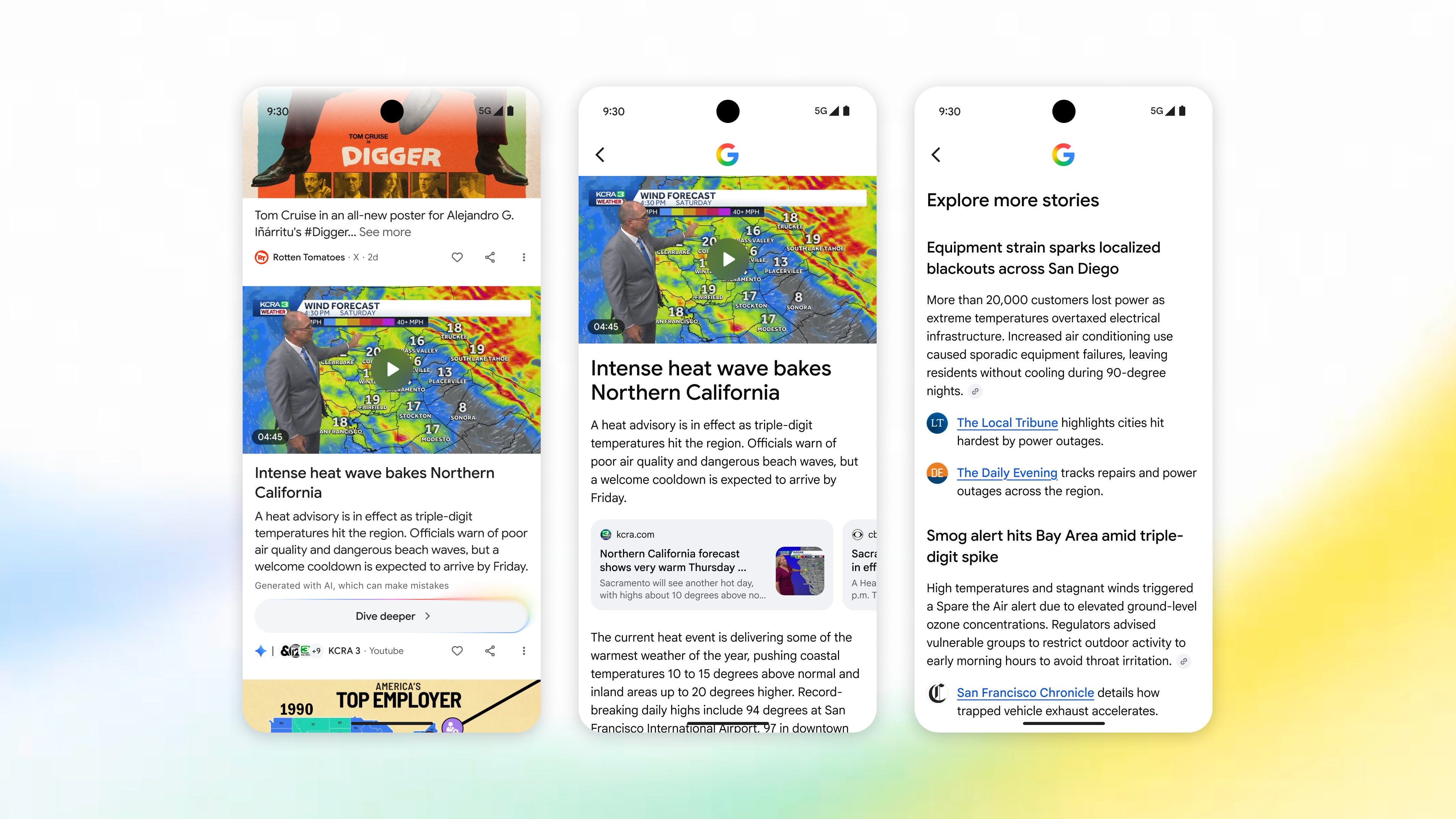
Many publishers have expressed concern over this new feature. Discover has become a key Google referral channel for many news and content sites, and an interstitial summary risks capturing readers before they click through to the source.
3. Free product listings have vanished from EEA search results
Organic product carousels and free Shopping listings have effectively disappeared from Google Search across the European Economic Area, with trackers recording drops of 90 to 100% in Germany, France, Belgium, Sweden and the Netherlands.
Google Ads Liaison Ginny Marvin confirmed the change as DMA compliance, with the freed-up space moving to comparison shopping services rather than Google’s own properties. Paid Shopping ads are untouched.
The EEA compliance window runs to 25th September, so further changes are likely before the deadline.
Social

4. The EU proposes banning social media for under-15s across all 27 member states
The EU has proposed the EU Kids Act, which would ban under-13s from social media outright and restrict 13 to 14 year olds to parent-supervised “mini accounts” with a one-hour daily limit. Under-15s would be excluded from independent accounts entirely. Platforms would be required to verify ages and redesign products for minors, with enforcement costs funded by a supervisory fee levied on companies.
The proposal follows Australia’s world-first under-16 ban, which has since influenced legislation across multiple markets. If passed, it would represent the largest structural change to how platforms like TikTok, Instagram and YouTube operate in Europe, affecting both user bases and the advertising audiences built around them.
PR

5. Gen Z romanticised the library back into relevance
Across TikTok and Instagram, a growing wave of young creators has been producing “come to the library with me” content, morning reading routines and customised library card hauls.
This piece by Firstpost explores how Gen Z’s growing disillusionment with social media (and a cultural shift toward quiet, phone-free spaces) is fuelling a real revival in library visits. The proportion of Gen Z visiting their local library has risen substantially, with 67% reporting library visits in recent years.
The library revival is a useful reminder that the most compelling creative territories sometimes involve making less, not more, of your screen time.
6. Fat Bear Week is back, and the competition is chunkier than ever
Katmai National Park’s annual Fat Bear Week opened voting on Tuesday 22nd September with 16 competitors, including defending champion Bear 32 Chunk, who won in 2025 despite a broken jaw. Last year’s tournament drew more than 1 million votes from over 100 countries.
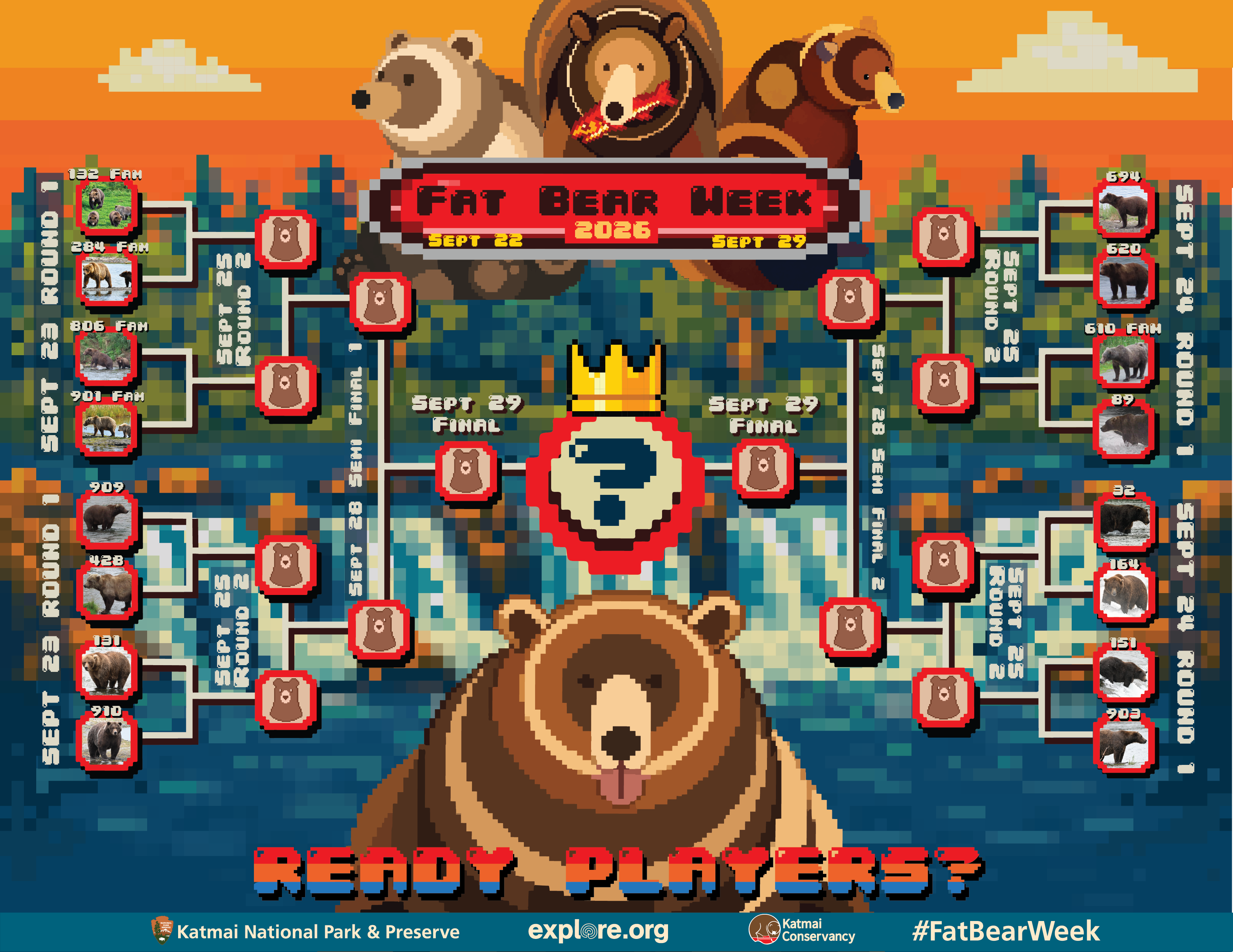
It sounds like a quirky annual event, and it is. But Fat Bear Week is also one of the most effective pieces of sustained public engagement run by any institution in the US: no agency, just well-named bears with compelling backstories and a bracket format that the internet is unable to resist. It’s a fantastic case study for brand campaigns with limited resources.
AI

7. Anthropic launches Opus 5.5
Anthropic has officially released Claude Opus 5.5, the first model in its new 5.5 family. Benchmark performance is a significant step up, with Opus 5.5 leading on agentic coding, computer use and knowledge work, costing 40% less per typical workload than Opus 5, and generating output over 30% faster.
The model also carries Fable 5.1-level safeguards on cybersecurity and biology, ships with adaptive thinking on by default, and includes preserved thinking as an anti-distillation measure. Claude Sonnet 5.5 and Haiku 5.5 are expected in the coming weeks.
8. Anthropic merges Cowork and chat into a single Claude experience
Anthropic has unified Claude Cowork and the main Claude chat interface into one product, rolling out on Pro and Max plans. The change means users no longer need to choose where to take a task; Claude decides what level of effort a request needs and can now complete longer background work from any conversation.
Also launching are Claude Docs, Claude Slides, and full integration of Claude Design inside conversations, all in beta. Users can download Slides as PowerPoint or PDF, and Docs can be edited collaboratively with comments.
9. Muse is growing faster than ChatGPT did at the same stage
According to mobile intelligence firm Apptopia, Muse racked up 1.8 million iOS downloads in its first 12 days in the US and Canada, compared to ChatGPT’s 1.3 million over the equivalent post-launch window. Daily active users tell a similar story: Muse had 642,000 US DAUs by day 12, against ChatGPT’s 231,000 at the same point.
The comparison isn’t perfectly clean (Muse launched on both iOS and Android, while ChatGPT was iOS-only at debut) but the scale of the gap is hard to explain away with that alone.
10. Muse may be getting its own email address
More Muse news. TestingCatalog has spotted a hidden Mail tab in the Muse web interface, suggesting Meta is building the agent a dedicated mailbox from which it can manage correspondence independently.
Whether Muse would operate from its own address or aggregate the user’s connected accounts in one view remains unclear from the current build, but the more plausible interpretation is a standalone inbox.
Combined with last week’s Shared Agents discovery ahead of Meta Connect, the picture of Muse as a full business-facing agent is taking shape quickly. An AI that can send emails from its own address, be shared across a team, and manage tasks across Meta’s apps is a meaningfully different proposition from a chatbot.
That’s a wrap for this week! See you next Wednesday for another round-up of the best and biggest stories from across the Search-Verse™.