

Search

1. Signs are pointing to a significant Google ranking update on the horizon
Google’s most recent helpful content guidance updates carry a clear signal for SEOs: the next major ranking update will focus on content quality, user satisfaction and authenticity.
Google has added new language explicitly calling out fake authorship profiles (i.e. AI-generated headshots, invented credentials, fabricated bios) as a form of deception that undermines trust. It also now counts interactive tools, user-generated content, and tabbed sections as “main content” that must serve the page’s actual purpose.
The result will be that SEO tactics built on keyword-stuffed headings, thin templated content, or manufactured author profiles become increasingly problematic. Focus on building pages to actually satisfy users.
2. Gemini is now adding UTM parameters to outgoing links
Spotted by SEOs on Reddit and confirmed by Google’s John Mueller, Gemini has started appending UTM parameters to the links it sends users to, following ChatGPT’s lead.
Previously, Gemini traffic often appeared as “direct” in GA4 because referrer data was frequently stripped, particularly in the mobile app and Android assistant. The UTM tags survive in-app webviews and server logs, giving site owners a cleaner picture of how much traffic Gemini is actually driving.
The change is currently undocumented, so it’s not yet clear exactly which Gemini surfaces trigger them, but it’s a practical win for attribution that’s been a long time coming.
Social

3. TikTok doubles down on commerce and AI at Advertising Week
At Advertising Week 2026, TikTok unveiled a conversational AI shopping assistant that delivers personalised product recommendations in-stream, understands context, remembers user preferences, and integrates real-time seller data on sizing and availability.
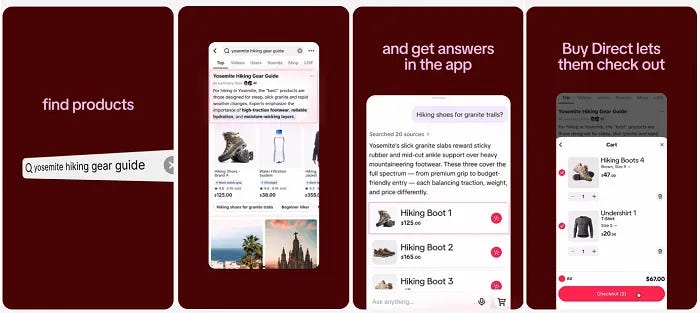
It also announced Agentic Leads, an automated DM-based lead generation tool, Smart+ Creative Selection to unify all brand creative assets in one planning hub, and a US expansion of its TikTok Ad Network.
With Black Friday approaching, TikTok’s push to close the gap between discovery and purchase is well-timed. The agentic shopping assistant in particular marks a meaningful step toward TikTok Shop’s long-standing ambition to replicate the Douyin commerce model in western markets.
4. YouTube Shorts deprioritises reuploads
From 1st October, YouTube’s Shorts recommendation system is giving less distribution to channels that primarily aggregate or repost other creators’ content without meaningful transformation.
The platform confirmed that minor technical edits and template-based tweaks like adding a border don’t count as original. The change aligns with YouTube’s existing reused-content spam policy, now applied directly to recommendation reach.
The change highlights the need for authentic perspective, original editing and distinctive storytelling to earn reach. Clipping and reposting, regardless of how it’s dressed up, increasingly won’t work.
5. Instagram may let you open straight to Reels
Instagram is testing an option that lets users set Reels as their default opening view, rather than the traditional post feed. Stories would remain at the top of the screen, and users could swipe back to the standard feed whenever they wanted.
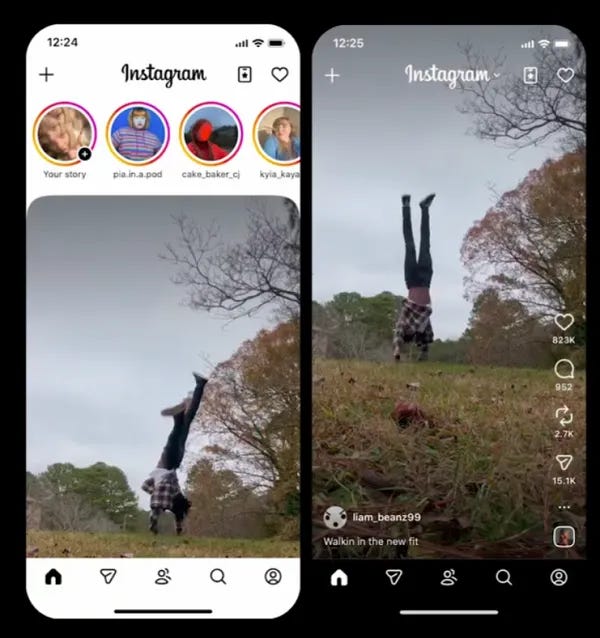
The format was tested in India last year. With Reels now accounting for more than 50% of all time spent in the app, the direction of travel is clear.
6. Reddit kills RSS and closes its public API, citing AI scraping
Reddit has announced that RSS feeds will go dark on 13th November, new public API requests will stop being accepted on 31st October, and remaining public API access will close entirely by March 2027. The platform cited large-scale scraping and automated abuse as the reasons, though the timing is notable as Reddit’s user-generated content has become a lucrative licensing business, with Google and OpenAI among its commercial partners.
This is a significant disruption for social listening tools, researchers and moderator bots that relied on the free API. Any AI assistants not holding a commercial deal with Reddit will lose access to its live content next year.
Reddit is reshaping the path to purchase. Here’s the data.
Want to understand Reddit’s growing role in search, AI visibility and purchase decisions? Our Reddit Statistics 2026 guide breaks down the numbers brands need to know.
PR

7. ASICS classifies nearly one in four humans as "Endangered"
Ahead of World Mental Health Day on 10th October, ASICS launched Human Nature, a 10-minute global documentary narrated by Sigourney Weaver.
Based on a survey of 34,000 people across 31 countries, the campaign introduces the world’s first Movement Conservation Status: Active, At Risk, or Endangered. Nearly one in four people globally fall into the Endangered category, exercising fewer than 30 minutes a week, with that figure projected to more than double by 2035.
The wildlife conservation framing makes something intuitively understood (what it means for something to be endangered) do the emotional work that raw statistics can’t. As AI replaces the physical effort of everyday tasks, ASICS has found a novel way to make inactivity feel consequential.
AI

8. OpenAI brings text watermarking to ChatGPT in the EU
OpenAI has announced it will begin adding invisible text watermarks to ChatGPT and Codex outputs for EU users in the coming weeks, to comply with the EU AI Act’s transparency requirements that took effect in August. The method, called textGrain and developed with researchers from Penn and Yale, works by subtly shaping word-choice patterns in ways that are undetectable to readers but identifiable by a detector.
The watermark travels with text when it’s copied, though OpenAI confirms that replacing around 10% of words with synonyms can reduce detection from 92% to 66%.
Watermarking is currently EU-only for consumers, with an opt-in available today for API developers globally. A missing watermark, OpenAI stresses, doesn’t prove human authorship; the text may simply be too short, too edited, or from another AI entirely.
9. OpenAI launches a new visual ad format in ChatGPT
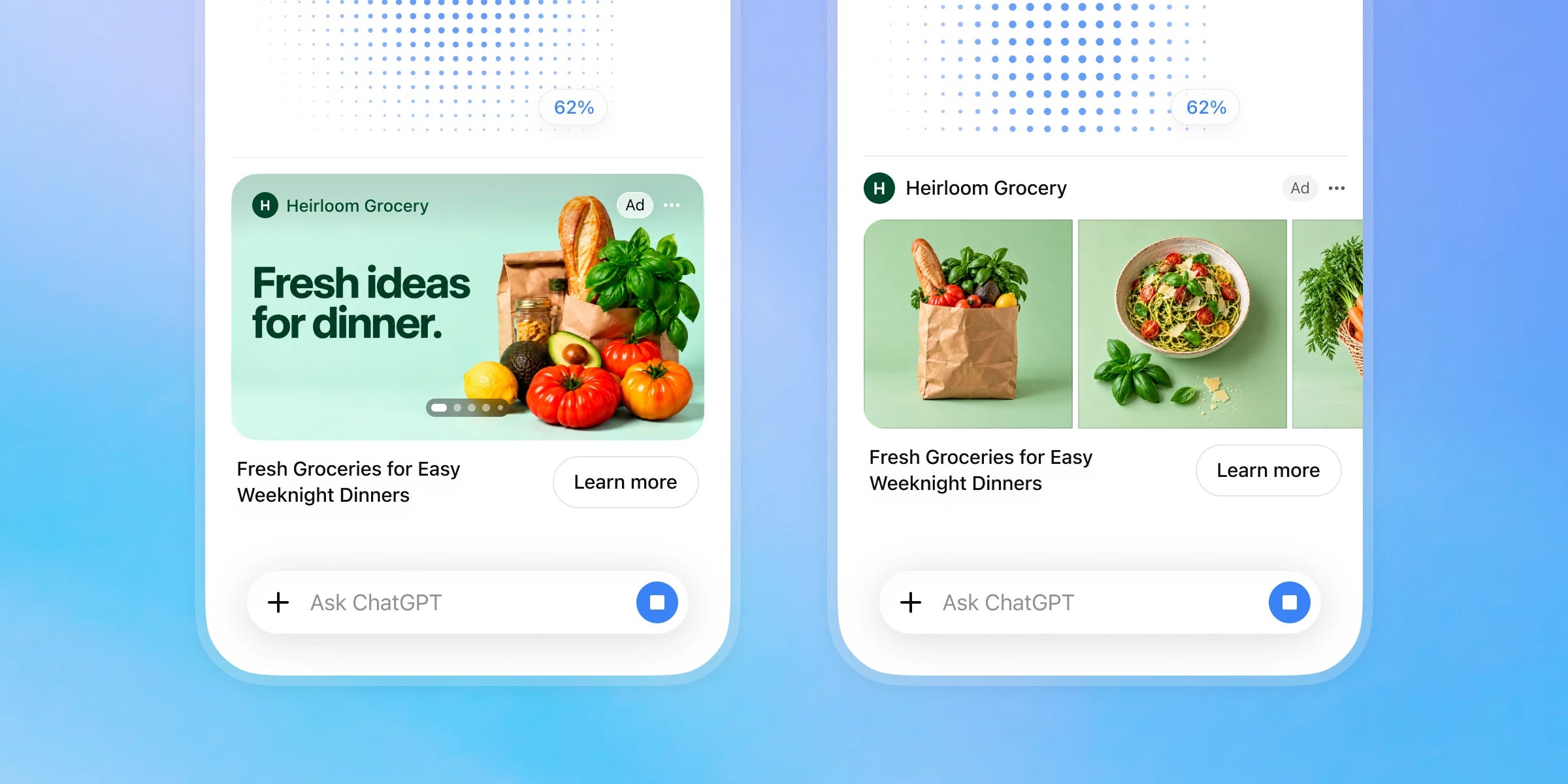
OpenAI has introduced a visual ad format that will initially appear during image generation for Free and Go plan users in the US. Ads show product images and experiences alongside the image being created, are clearly labelled, and don’t influence ChatGPT’s responses.
With ChatGPT now reaching 1.2 billion users weekly, the advertising opportunity is substantial. A native ChatGPT placement alongside active product discovery conversations is a meaningfully different context than banner or social ads.
10. Meta open sources the Muse Charm SDK so anyone can build their own AI gadget
Following the Charm device’s debut at Connect, Meta has open sourced the code behind its Muse gadget hardware, inviting developers to build their own Muse-connected devices using off-the-shelf components: an ESP32 microcontroller, a Raspberry Pi, or whatever hardware they have on the workbench.
Suggested projects include an E Ink display showing Muse reminders, an HDMI stick that puts Muse on a TV, or a touchscreen device resembling a DIY Charm.
The move positions Muse as a platform rather than just a product, and gives the developer community a way to experiment with agentic AI hardware before the Charm ships commercially in December.
That’s a wrap for this week! See you next Wednesday for another round-up of the best and biggest stories from across the Search-Verse™.