
Google Information Agents, UK social media ban & more
This week's highlights across Search, Social, PR and AI.

Search

1. Google’s AI search agents are now live for paying subscribers
Google has begun rolling out Information Agents within AI Mode for Google AI Ultra subscribers. The feature allows users to set ongoing search tasks that monitor the web and deliver updates automatically when new information becomes available.


It’s a big step towards agentic search, where Google moves beyond answering questions and starts proactively completing research tasks on behalf of users. If the trend continues, visibility may increasingly depend on whether AI agents can find and surface your content, not just whether people can.
2. Google must now give UK businesses notice before major ranking changes
The UK’s Competition and Markets Authority has introduced new requirements forcing Google to provide greater transparency around organic rankings, including AI Overviews. The changes will require advance notice of significant ranking updates, objective ranking criteria and a formal process for businesses to raise concerns.
While Google won’t be revealing its algorithms, the move represents one of the strongest regulatory interventions into search visibility to date and could become a blueprint for other markets.
4. Bing expands AI visibility reporting for publishers
Microsoft is rolling out four new features within Bing Webmaster Tools’ AI Performance dashboard: Citation Share, Topics, Intents and Compare reporting. The updates move beyond simple citation counts and provide a clearer picture of how AI systems are using and surfacing content.
As AI search continues to grow, understanding where and why content is cited may become just as important as traditional rankings and organic traffic.
Social

5. The UK is banning social media for under-16s
The UK government has officially announced plans to ban under-16s from using social media platforms including TikTok, Instagram, Facebook, YouTube, Snapchat and X from early next year.
The move follows similar legislation in Australia and forms part of a broader push to address concerns around online safety and mental health. Enforcement will focus on platforms rather than users, though questions remain about how effective age verification measures will be in practice.
6. Social media has officially become the world’s biggest news source
Reuters Institute’s latest Digital News Report shows social media has overtaken television and news websites as the most-used source of news globally. The shift is particularly significant because algorithms and creators increasingly influence how stories are discovered and framed.
Social media platforms offer convenience and accessibility. But they are also a playground for misinformation, with many raising valid concerns over how trustworthy engagement-driven content can really be.
7. TikTok’s AI slop problem is worse than many realised
A new study from Kapwing found that 59% of videos shown to a brand-new TikTok account were AI-generated, compared to 21% on YouTube Shorts. Some categories were particularly saturated, with AI content making up the vast majority of videos under certain children’s content hashtags.
While TikTok has introduced controls to reduce AI-generated content, the findings suggest synthetic media is rapidly becoming a defining feature of the platform experience. This is particularly concerning in light of the above findings around our growing reliance on social media as a news source.
8. Meta wants AI to become Facebook’s search engine
Meta has launched AI Mode for Facebook, letting users ask questions and receive AI-generated answers based on public posts, Groups and Reels. Rather than displaying traditional search results, Facebook now summarises conversations happening across the platform.

The approach mirrors broader industry trends, but it also raises familiar concerns around accuracy and misinformation when AI systems generate answers from user-generated discussions rather than authoritative sources.
9. Threads reaches 500 million users
Three years after launch, Threads has surpassed 500 million monthly active users. Originally created as Meta’s response to Twitter’s turbulent post-acquisition period, the platform has steadily grown through integration with Instagram and increasing cultural relevance.
It seems Meta is well on its way to reaching its goal of one billion users, with the latest milestone suggesting Threads is evolving from an Instagram extension into a destination users actively seek out in its own right.
Join Kaizen’s Reddit Roundtable in London
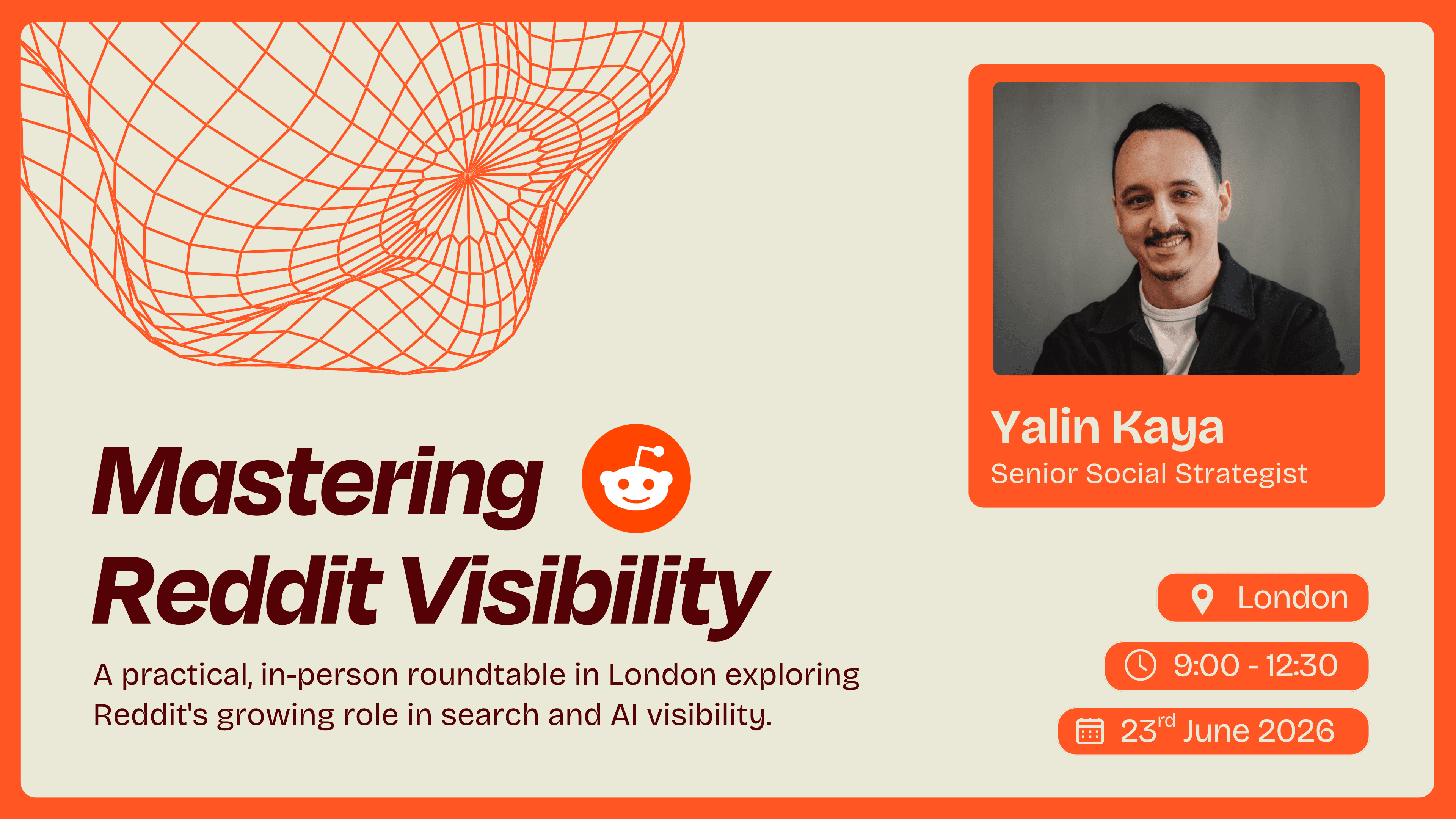
Reddit’s influence across search, AI and social continues to grow, making it one of the most important platforms for marketers to understand in 2026. On 23rd June, Kaizen is hosting an in-person roundtable led by Senior Social Strategist Yalin Kaya exploring how brands can build Reddit into their wider marketing strategy.
The session will cover how Reddit content influences AI answers and search visibility, how to use communities for audience insight, and how brands are turning real conversations into content, campaigns and paid media strategies.
Register for the event here.
PR

10. A recreated 90s video shop delivers a powerful anti-smartphone message
Smartphone Free Childhood has launched a striking cinema campaign built around a recreated 1990s video rental store – built by real people, not AI.
The film contrasts the clearly defined content boundaries of the pre-smartphone era with today’s algorithm-driven digital experiences, where children can access almost unlimited content through a single device.
The message is wrapped in nostalgia rather than fear, delivering a memorable reminder of how dramatically childhood media consumption has changed.
AI

11. Microsoft opens Copilot Cowork to all enterprise users
Microsoft has made Copilot Cowork generally available to Microsoft 365 Copilot customers worldwide. The platform combines Microsoft’s AI capabilities with Anthropic models and a growing ecosystem of partner integrations.
Designed to move beyond simple chat interactions, Cowork can assist with tasks such as analysing large datasets, comparing documents and managing workflows.
12. ChatGPT is getting a dedicated hub for scheduled tasks
OpenAI is rolling out a new Scheduled page that gives users a central place to manage recurring tasks, reminders and monitoring requests. The update makes ChatGPT’s existing scheduling capabilities much more visible and introduces stronger controls for editing, pausing and managing future actions.
It also reinforces OpenAI’s broader ambition to turn ChatGPT into a proactive assistant that works in the background rather than waiting for users to initiate every interaction.

That’s a wrap for this week! See you next Friday for another round-up of the best and biggest stories from across the Search-Verse™.