
Google launches new Gemini models, TikTok tests AI likeness detection & more
This week's highlights across Search, Social, PR and AI.

Search

1. Google is AI Mode's second most-cited domain
New data shows that google.com has become the second most-cited domain in Google’s own AI Mode, with citation share rising 8.4x between April and the end of June.
Almost all of that growth is concentrated in two Google-hosted surfaces: Business Profile cards for local queries, and Product Knowledge Panels for product searches. The sectors seeing the biggest spike in local citations include hospitality, home services, restaurants, healthcare and real estate.
The implication is that more of AI Mode’s answer surface is pointing to Google’s own pages rather than to independent websites. The practical upside for brands is that these citation surfaces are fed by data you control directly (your Business Profile and your product feed), making them a more actionable optimisation target than sitewide content. The catch, of course, is that a citation in a Knowledge Panel doesn’t automatically mean a visit to your site.
Make sure your brand isn’t invisible to AI

If this story’s got you thinking about your own visibility in AI search, our LLM Visibility Whitepaper is a practical guide to measuring and optimising your brand’s performance across tools like ChatGPT, Gemini and Perplexity.
Social

2. Instagram now lets you swap out the music on old posts
Instagram has launched a “Replace Audio” tool that lets users change the soundtrack on any published feed post or carousel, at any time, without losing the post’s existing likes, comments, shares, or reach. Previously the only way to update a post’s music was to delete it and start again, sacrificing all its engagement in the process.
This removes a frustrating constraint for brands and creators managing content over time. A post built around a trending sound doesn’t have to become a liability if that sound later gets removed or falls out of favour, and older content can be refreshed to align with new campaigns without having to rebuild its distribution from scratch.
3. TikTok is testing an AI likeness detection tool for creators
TikTok is piloting an opt-in feature that lets creators in the US scan the platform for unauthorised AI likenesses of themselves and report them directly to the company.
Spotted by social media consultant Matt Navarra and confirmed by TikTok, the tool moves deepfake enforcement closer to the people most likely to notice the damage first. YouTube is understood to be working on a similar feature.
This goes beyond individual creator safety. For brands running influencer campaigns, unauthorised synthetic likenesses can muddy what’s endorsed and what isn’t, attaching a creator’s identity to content they had no part in. Platforms treating likeness protection as core infrastructure rather than just a special case is a meaningful shift in how the creator economy manages trust.
4. YouTube clarifies which AI videos can't be monetised
YouTube has updated its Partner Program guidelines to spell out three specific categories of content that will no longer be eligible for monetisation: generic, repetitive or template-based videos; off-putting or distressing content; and synthetic AI personas covering sensitive topics like health, finance or legal matters.


YouTube’s Head of Trust and Safety was clear that the policy doesn’t ban AI-assisted content, but instead punishes low-effort, formulaic output designed to farm views.
That distinction matters for brands and agencies using AI in production workflows, where the question increasingly isn’t whether AI was involved, but whether the result demonstrates genuine human creative intent.
PR

5. Uber sends a tissue truck to commiserate with England fans
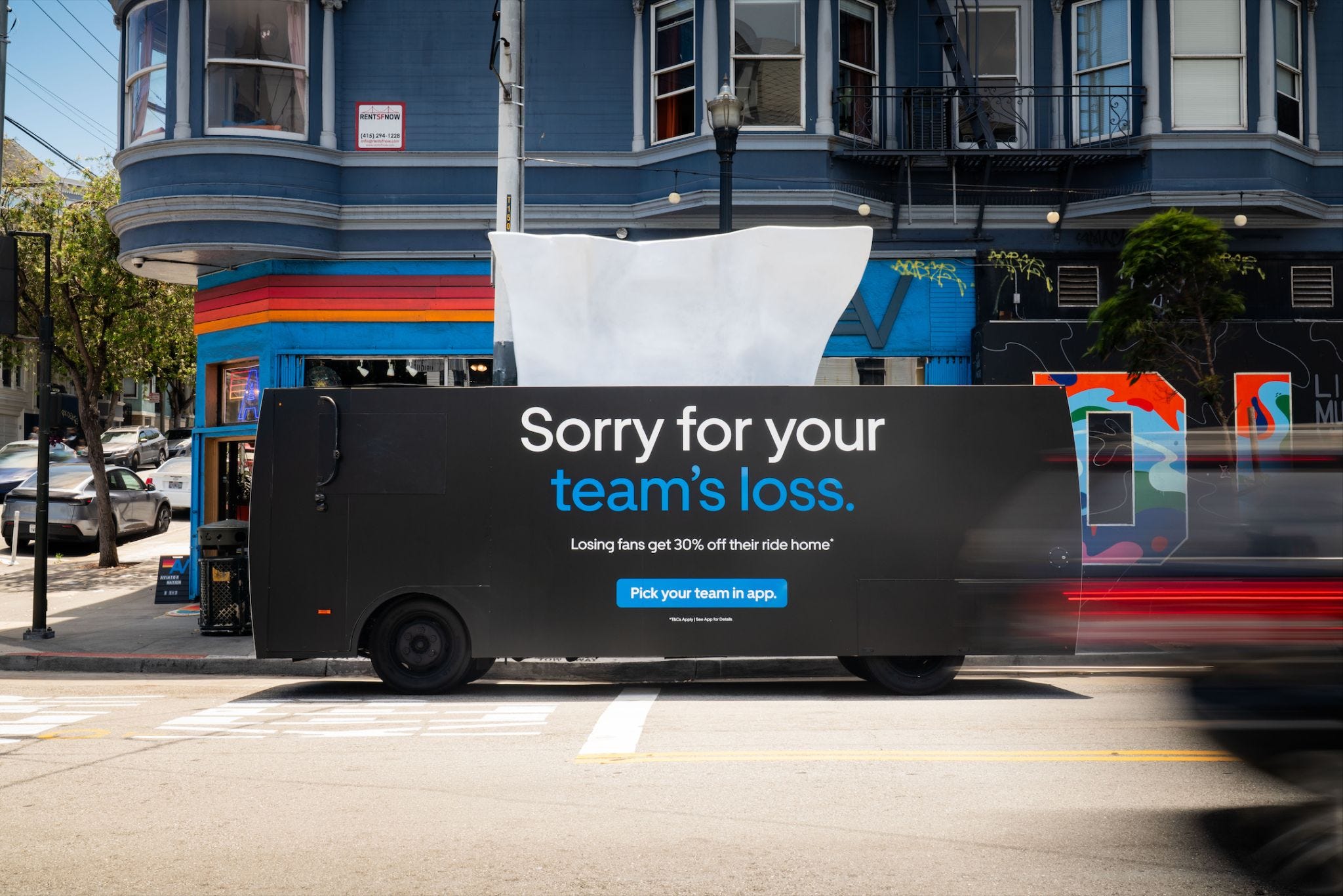
Following England’s World Cup exit at the hands of Argentina, Uber deployed a branded “Sorry for Your (Team’s) Loss” tissue truck as part of a wider activation running across nine host cities and two FIFA Fan Festivals throughout the tournament. The truck, shaped like an oversized box of tissues, was paired with an in-app “Defeat Deals” mechanic offering 30% off a ride home once a supporter’s team was knocked out.
It’s a well-timed piece of reactive marketing that doubles as genuine product utility, turning the lowest moment of a fan’s tournament into a reason to open the app.
As a coda to the recent Marmite WeMite rebrand, it’s also a reminder of how much creative opportunity the World Cup generates precisely because it deals in unscripted, emotionally charged outcomes.
AI

6. Google launches Gemini 3.6 Flash, 3.5 Flash-Lite and 3.5 Flash Cyber
Google has released three new Gemini models. Gemini 3.6 Flash is the headline addition: a more efficient and higher-quality version of 3.5 Flash, with a 17% reduction in output token usage and meaningful gains in coding, document parsing and multi-step agentic tasks.
Gemini 3.5 Flash-Lite is the fastest model in the series at 350 output tokens per second, aimed at high-throughput workflows. The third model, 3.5 Flash Cyber, is a cybersecurity-focused release available exclusively to governments and trusted partners via Google’s CodeMender code security agent.
Both 3.6 Flash and 3.5 Flash-Lite are available now via Google AI Studio, the Gemini API and the consumer Gemini app. Google also confirmed that Gemini 3.5 Pro is in testing with partners and that pre-training for Gemini 4 has already begun.
7. Gemini Live and Skills are coming to the web
Spotted in recent Gemini builds, Google appears to be preparing two significant additions to the desktop and web versions of Gemini: Gemini Live, its real-time voice mode, which has so far been mobile-only; and a Skills feature that would bring reusable instruction packages into ordinary chats, not just the Gemini Spark agent tier.
If the Skills rollout proceeds, users would be able to upload, create, edit, and have Gemini generate skills on their behalf, without needing an AI Ultra subscription.
Both Claude and ChatGPT already offer versions of persistent skills, and closing that gap would make everyday Gemini much more useful as a persistent work assistant.
8. OpenAI launches small business programme built around ChatGPT Work
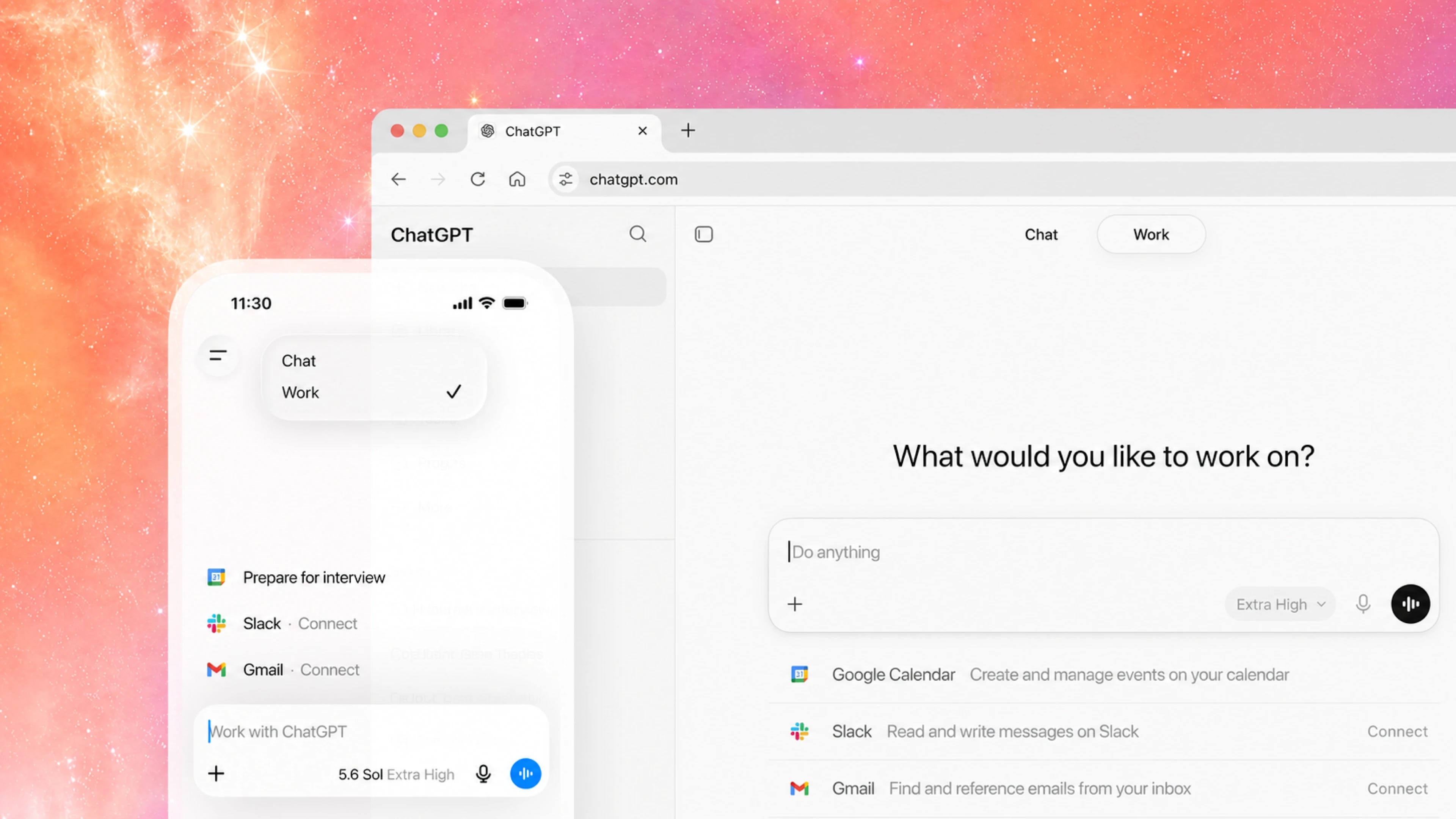
OpenAI has announced a dedicated programme for small businesses, combining virtual training webinars, in-person AI academies across the US, new practical guides, and pre-built integrations with partners including Shopify, Intuit, Slack, Dropbox and Wix.
The programme centres on recent launch ChatGPT Work, OpenAI’s multi-step agent, which is now powered by GPT-5.6 and available across all subscription plans.
The framing is deliberate, with OpenAI positioning ChatGPT Work as a force multiplier for lean teams that can’t afford specialist hires, and the SME market representing a significant untapped segment for AI adoption. For agencies working with smaller clients, there’s a growing expectation that AI literacy will be part of what they’re buying.
That’s a wrap for this week! See you next Wednesday for another round-up of the best and biggest stories from across the Search-Verse™.