

Search

1. Google overhauls EEA search results under DMA pressure
Following a €460 million DMA fine in July, Google has rolled out redesigned search results across the European Economic Area for hotel, flight, transport and product queries. Rival aggregators now appear in a dedicated unit with the top-ranked provider expanded by default, and direct suppliers get a separate accompanying unit.
Google’s SVP Nick Fox said in a statement to Reuters:
“These changes degrade the user experience for Europeans – boosting online intermediaries at the expense of local businesses, and removing helpful features people rely on every day. Users outside the EU will not be impacted by these changes.”
The CMA’s 60-day compliance window runs out in late September, and the Commission hasn’t confirmed whether it considers the current design sufficient.
2. Traditional Search campaigns are being tested in AI Mode
Google Ads Liaison Ginny Marvin confirmed an experiment allowing exact and phrase match keywords to serve text ads inside AI Mode. Eligibility is restricted to queries where Google detects explicit, direct user intent, meaning it won’t catch conversational or exploratory searches. No rollout timeline has been announced.
This is a significant change for advertisers who’ve resisted moving to Performance Max, meaning tightly targeted campaigns could reach AI Mode without surrendering keyword control. Though it’s worth noting that Google is still positioning AI Max and Performance Max for Search as the go-to products for capturing more complex searches.
Want to know how your brand shows up in AI search?

If this story’s got you thinking about your own visibility in AI search, our LLM Visibility Whitepaper is a practical guide to measuring and optimising your brand’s performance across tools like ChatGPT, Gemini and Perplexity.
Social

3. TikTok adds voice comments, polls and photo carousels
TikTok is rolling out four new comment formats globally: voice comments of up to one minute for users 18 and over; creator-posted polls with up to five options and customisable time limits; photo carousel comments with up to nine images; and Live Photo comments with a brief motion preview.
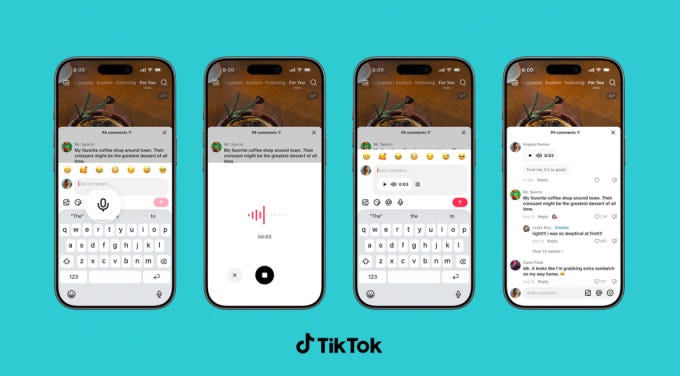
The stated ambition is to make comment sections somewhere people linger and interact, rather than simply leave feedback.
For brands thinking about community management, voice and poll comments in particular will need updated response strategies.
4. Instagram's AI content labelling is misfiring badly
A wave of creator complaints has revealed that Instagram’s automated “AI Content” label is being incorrectly applied to images with no meaningful AI involvement, including photos lightly edited in Canva using its background removal tool or basic blemish fixes. Meanwhile, actually AI-generated images are slipping through the cracks unlabelled.
These labelling errors completely undermine the system’s purpose. A label that can’t reliably distinguish between a background-removal tweak and synthetic image generation doesn’t build audience trust but erodes it, including for images that actually are authentic.
5. Australia proposes the right to opt out of social media algorithms
Australia’s government has published a draft Digital Duty of Care Bill giving social media users the right to block algorithmic recommendations and choose their own chronological feed instead. Breaches could attract fines of up to A$109 million.
The proposal follows Australia’s world-first under-16 social media ban, which has already influenced legislation in other countries, and arrives as the EU separately investigates Meta’s allegedly addictive design practices.
If the new bill passes and triggers further imitation, the personalisation engines that underpin social media advertising could face structural constraints in major markets within a few years.
PR

6. IKEA turns its product names into a TikTok challenge
IKEA UAE has launched The Swedish Test, a TikTok voice-recognition filter that puts users’ pronunciation skills to the test, starting with simpler names like LACK and BILLY before escalating to the slightly more challenging BEKVÄM and BJÖRKSNÄS. Correct answers accumulate into a score, with the best performers entering a draw for an IKEA gift card.
The pronunciation-challenge format takes advantage of a real TikTok trend, with voice-recognition games becoming increasingly popular in recent months. The fact that IKEA also quietly released an in-app pronunciation guide earlier this year ties the creative work to a real product commitment.
AI

7. Meta launches Muse, its personal AI agent
Meta has launched Muse, a personal AI agent available as a standalone app and as an in-stream chatbot connected to Facebook and Instagram. Users can name their Muse, give it long-term goals, and have it take autonomous actions like booking travel, filling forms, sending emails, and facilitating in-app purchases.
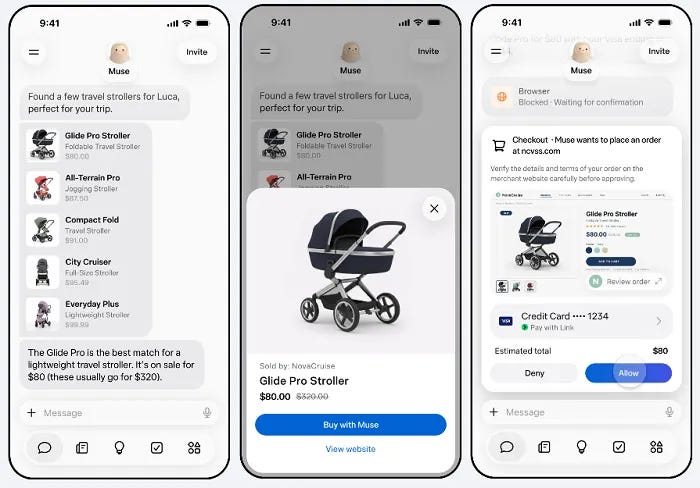
The purchase facilitation is Muse’s most commercially significant feature for brands, though it will only work if users trust it enough to hand it the keys.
Meta has repeatedly reassured users of Muse’s security and privacy, highlighting that it has no visibility into passwords or payment methods.
8. OpenAI launches ChatGPT Images 2.5
OpenAI has released ChatGPT Images 2.5 across all tiers, cutting image generation latency by up to 50% compared to Images 2.0 while improving lighting, texture fidelity, editing precision and multi-turn consistency.
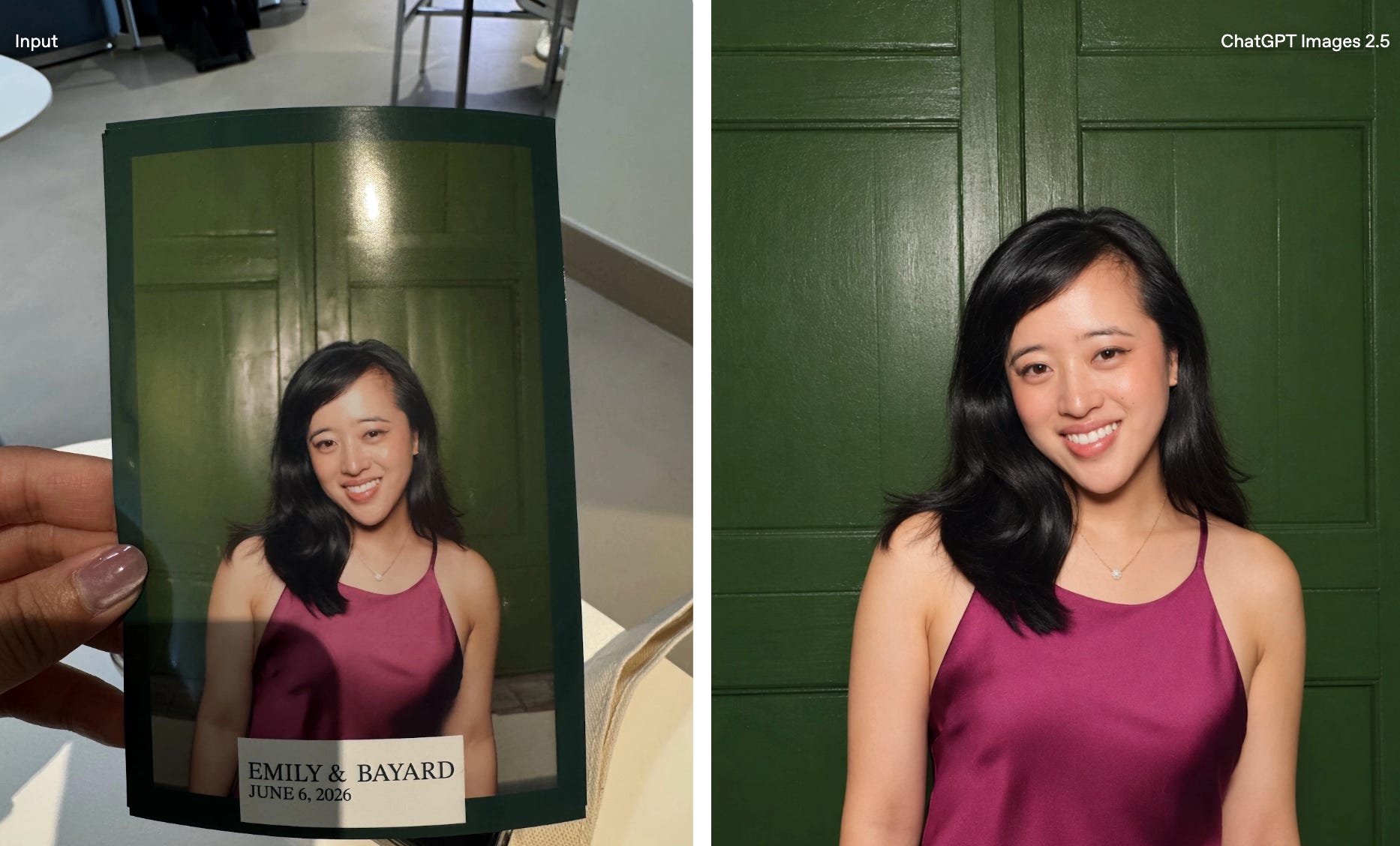
New features include Sketch, which lets users draw directly in ChatGPT as a reference input, and templates for popular formats like flyers and product photos.
The combination of faster generation and better reference-subject fidelity (the model’s ability to preserve a recognisable person or object across edits) should be a big improvement for agencies and production teams building at scale.
9. ChatGPT Work can now learn your writing style from Gmail and Slack
OpenAI has shipped a writing personalisation feature for ChatGPT Work that analyses a user’s existing emails, messages and files across connected Gmail, Google Drive, Slack and SharePoint accounts, then applies those patterns to new drafts. Setup is via Settings > Personalization > Writing, available on the web for paid plans.
The hope here is that AI-generated text stops sounding generic and starts sounding like the person behind it. Whether the feature learns style accurately enough to be relied upon without review remains to be seen.
That’s a wrap for this week! See you next Wednesday for another round-up of the best and biggest stories from across the Search-Verse™.