

Search

1. Google’s September spam update is done
Google’s September 2026 spam update completed its rollout on 8th October after almost 14 days, making it the longest-running spam update of the year. Previous 2026 updates each wrapped in fewer than three days.
Google confirmed it’s a standard spam update with no specific new targets disclosed, but trackers logged three distinct waves of volatility: immediately after launch, around 30th September, and between 4th and 7th October. If rankings or traffic shifted across those windows, reviewing against spam policies is the first move.
2. Google Discover is being rebuilt as an AI concierge
A Google UX Principal job posting reveals plans to transform Discover from a content recommendation engine into a “proactive, hyper-personalized concierge experience.”
The description calls for the new Discover to help users “make progress on their goals” and move “from inspiration to action,” with deeper integration across YouTube, Shopping, Chrome and Android. Google is also explicitly targeting younger audiences, seeking someone with a track record of “product-market fit in competitive content ecosystems.”
For publishers relying on Discover traffic, the concierge model could mean AI synthesises content rather than linking to it, which is a concern worth watching as this evolves.


Social

3. YouTube is putting Ask YouTube inside the Shorts player
YouTube is running a limited English-only test of Ask YouTube directly within the Shorts player, letting viewers aged 18 and over tap a sparkle icon on select Shorts to ask questions or explore pre-populated prompts about what they’re watching.
The watch-page version of Ask YouTube already reached 140 million users in June. New Android and iOS feeds for discovering similar creators and related Shorts are also launching alongside the test.
For brands producing Shorts, the prompt layer adds another reason to make sure captions and descriptions are clear and answer-ready: if Ask YouTube is surfacing information about your video, that copy is doing more work than it used to.
4. Facebook lets you tell its algorithm what you want in plain English
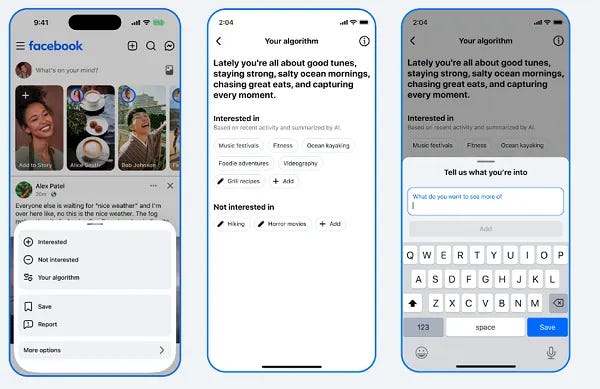
Facebook has launched a conversational version of its Your Algorithm control that lets users add or remove interests using natural language prompts rather than toggling category settings.
After tapping “Interested” or “Not Interested” on a post, the app can now ask follow-up questions and adapt the feed in real time. Meta says large language models now underpin the system, enabling it to understand intent and context rather than just keywords.
It’s unclear yet whether users will actually engage with manual controls. Historically, Facebook users don’t update their settings even when they’re unhappy with the feed. The mechanism is good; adoption is the harder problem.
PR

5. Pregnant Then Screwed puts a “33% off” sticker on women’s faces
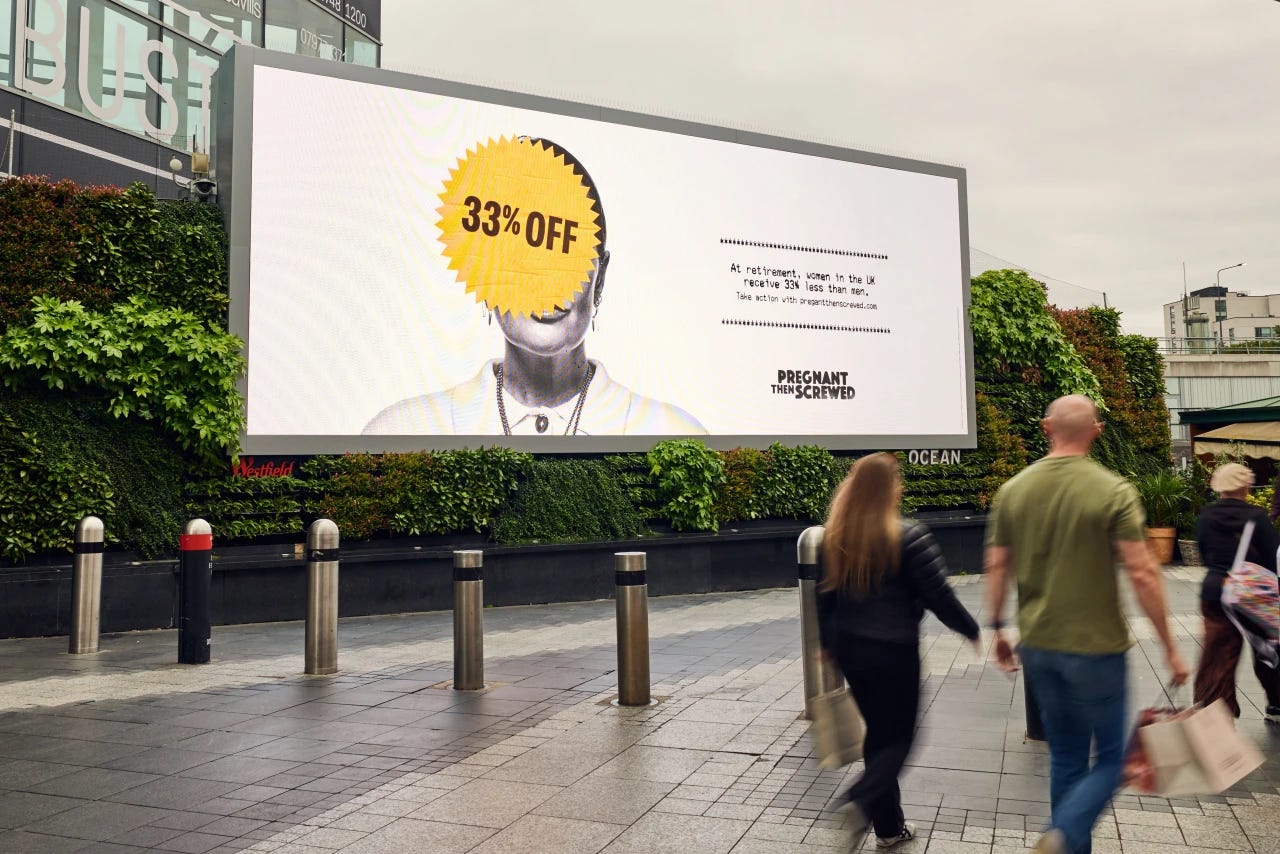
Campaigning charity Pregnant Then Screwed has launched “Thanks for your service*”, a campaign that plasters giant “33% off” starbursts over women’s faces in stark black-and-white portraits. The stat highlights the fact that the average UK woman retires with a pension pot a third smaller than men’s, largely due to career breaks and part-time work taken for childcare.
A second set of images shows women carrying the oversized starbursts on the streets of London; a third formats working mothers’ lives as supermarket till receipts, ending with “-Motherhood Tax” and “-33%.”
The campaign cleverly takes the visual language of the sale sticker, which everyone instinctively understands, and inverts it. The discomfort comes from recognition, not shock, which tends to be the more durable combination.
AI

6. Meta launches Muse Wonder, its most capable agent model yet
Meta has released Muse Wonder and Muse Wonder Full, trained at its gigawatt-scale Prometheus data centre and built for sustained personal and professional agentic work. The models combine Active Memory, which carries personal context across conversations, and Active Focus, which keeps the model working through multi-step obstacles rather than stopping short.
Muse Wonder Full scores second on the Artificial Analysis Intelligence Index, within two points of Claude Opus 5.5, and leads on the DeepSWE coding benchmark at 79 points. Both models are available through the Meta Model API and Muse Code, with Wonder Full currently gated to Muse Code subscribers.
7. Google announces one universal AI for all work
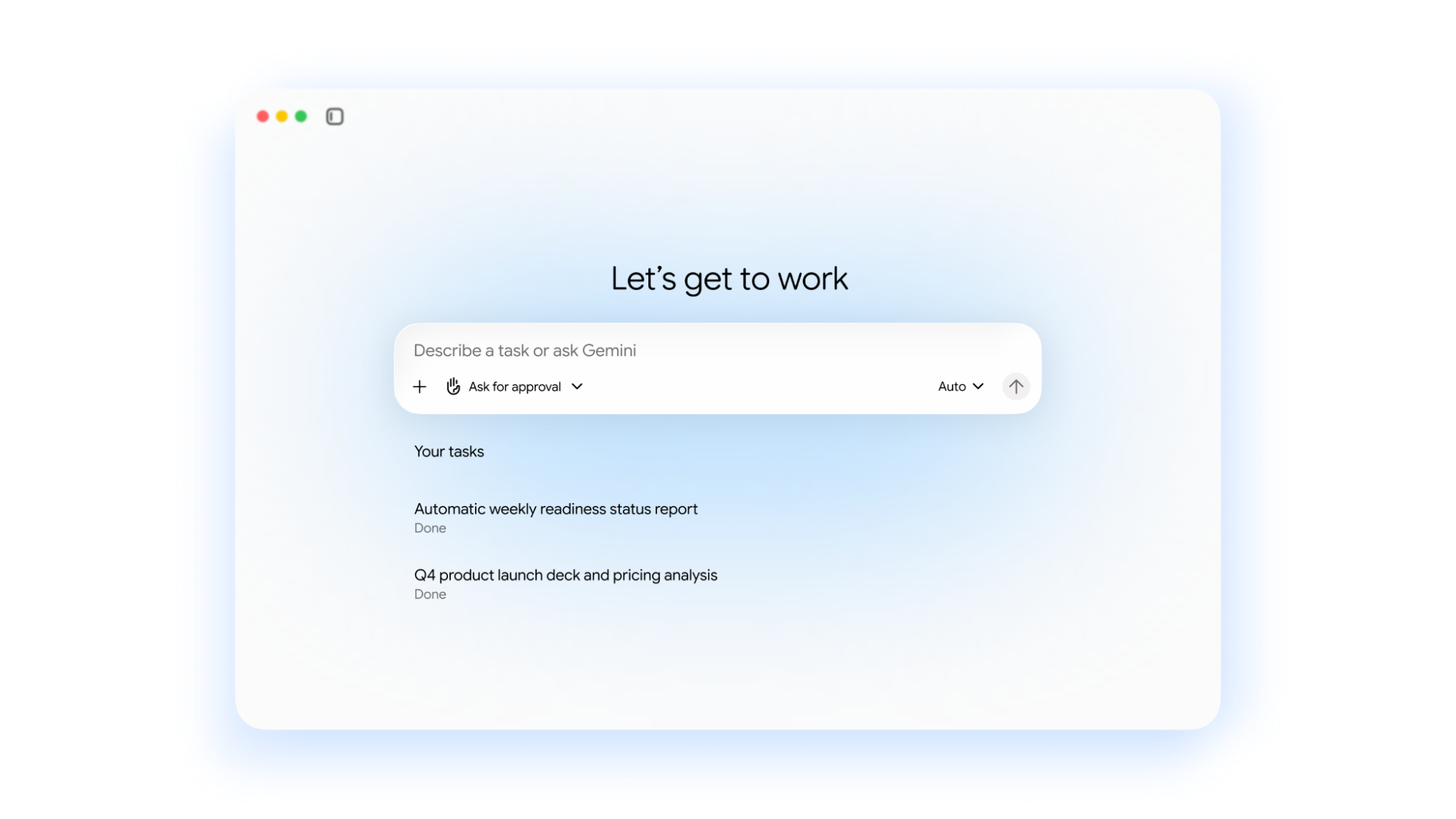
At Gemini at Work 2026, Google Cloud CEO Thomas Kurian unveiled the Gemini agent: a single AI for every workplace task, from answering questions and producing documents to coding and running data pipelines.
It operates across Workspace, the command line, Slack, Microsoft 365, and third-party apps, selects the best model for each job from the Gemini family or Anthropic’s Claude, and keeps a unified memory regardless of which device or channel you access it from.
Coworker agents get their own email addresses, calendar, Drive and company directory entries, operating under their own identity rather than a user’s.
8. Google launches Playground to make games without code
Google has also launched Playground, an experimental browser-based platform where users can create playable games from text prompts alone, with no coding required. Created games can be kept private, shared via link, or published to a community gallery. Multiplayer and leaderboards are supported in select genres.
Unity Spark, an integration bringing professional-grade 3D mechanics to the platform, is in closed beta. The launch is US-only for users 18 and over, with creation access tiered by Google AI subscription.
9. Big Tech is making its AI agents cute, and it’s worth interrogating
A Fast Company piece by Grace Snelling traces the growing convergence of AI agent aesthetics: SpaceXAI’s orb-eyed GrokBots, Meta’s fluffy Muse mascot, OpenAI’s customisable dot characters.
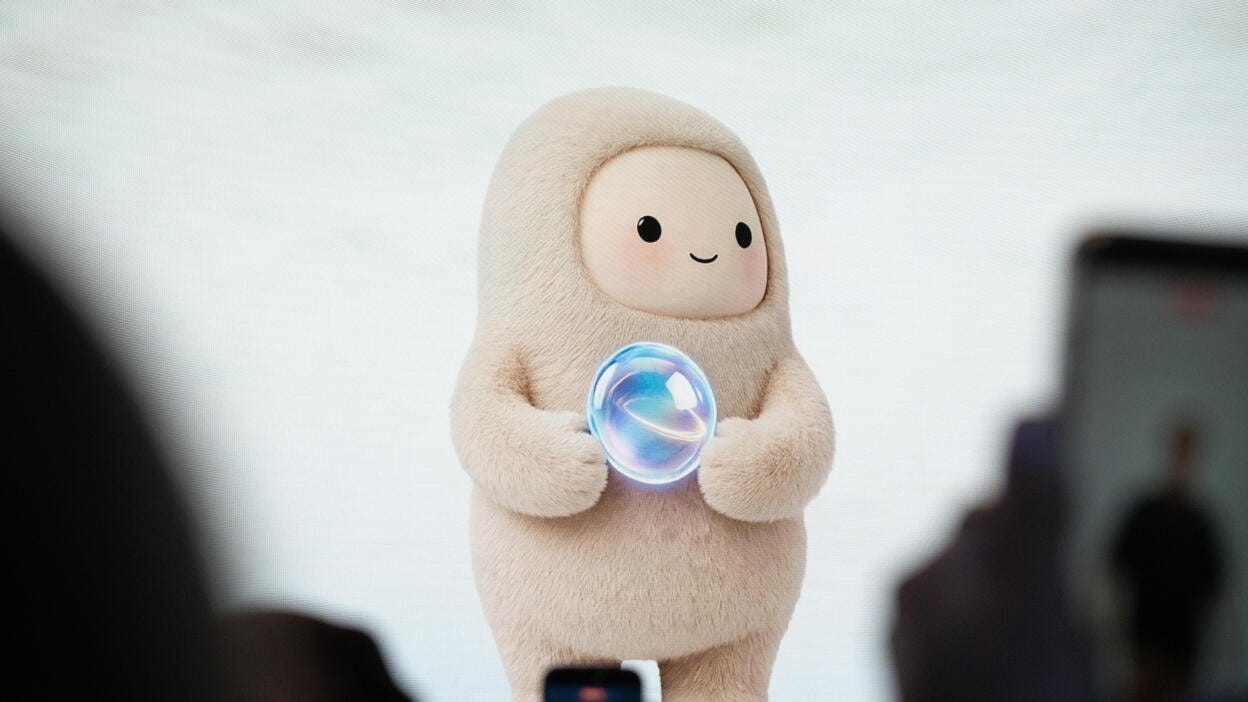

Design researchers point to the evolutionary psychology of cuteness (we forgive cute things for mistakes, and we want to keep them close) as the driver, while flagging the risk of the same aesthetic gravity well that turned Facebook’s distinctive Alegria illustration style into the universally mocked “corporate Memphis.” Buck’s CCO Kevin Walker puts it plainly: if every AI company has an adorable mascot, not one of them is memorable.
Cuteness signals approachability and forgiveness, but it doesn’t signal trust, capability, or differentiation. It’s worth asking which of these your audience actually needs from an AI product right now.
That’s a wrap for this week! See you next Wednesday for another round-up of the best and biggest stories from across the Search-Verse™.