

Search

1. Google launches a Universal Cart ahead of the holiday season
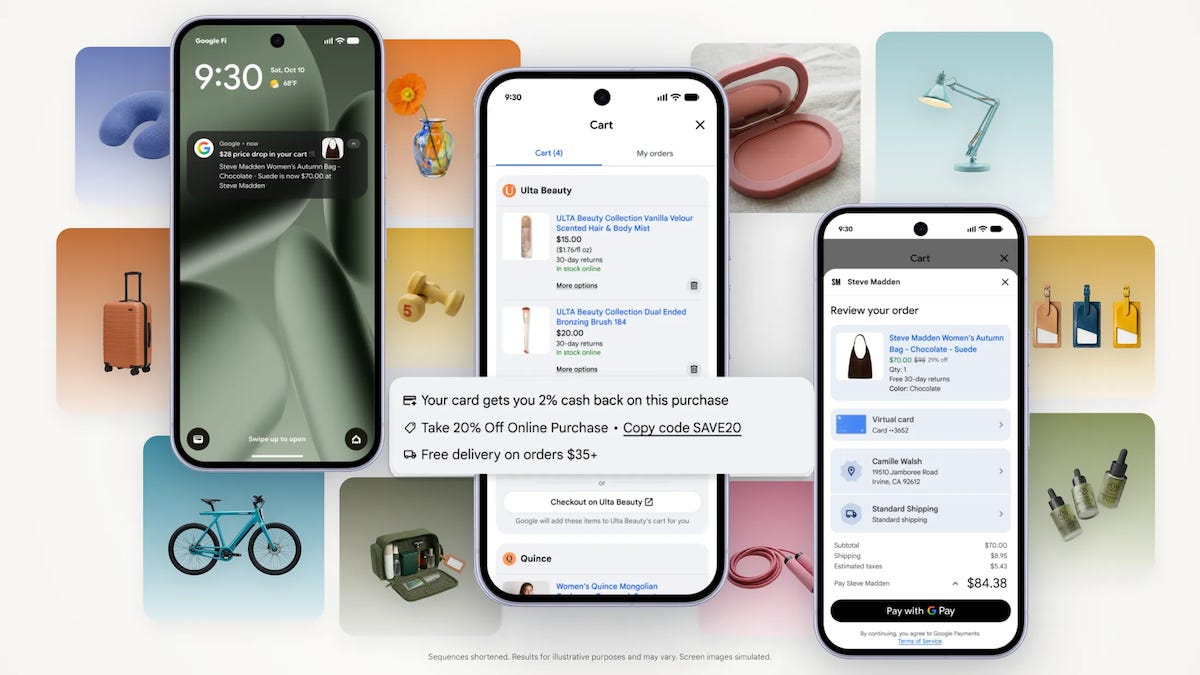
Google has launched Universal Cart in the US across Search and the Gemini app, letting shoppers save products from multiple retailers in a single place rather than juggling browser tabs.
The cart monitors saved items for price drops and back-in-stock alerts, surfaces relevant promo codes and card-linked perks via Google Wallet, and supports checkout through Google Pay or a direct transfer to the retailer’s own cart. Nike, Sephora, Target, Ulta Beauty, Walmart, Wayfair and many Shopify merchants are supported from day one.
For retailers not yet integrated with Google Pay or the Universal Commerce Protocol, this is worth adding to the roadmap now; the holiday window is short.
2. Google is pushing inline links higher in AI responses, and making them clickable
Google has confirmed it has made “continued and substantial increases” to the presence of inline links in AI Mode and AI Overviews, placing them higher in responses more frequently.
Two tests are also underway: a section at the top of certain responses that surfaces links to official sources with explanatory context, and image thumbnails on the related-article links that appear at the end of responses. Creator and publisher name links within AI Mode video results now connect to Search profiles as well.
Separately, the Preferred Sources article carousel is expanding to more locations and languages, and usage of the feature has grown sevenfold since January. If you haven’t yet added the “Follow on Google” button to your site, now is a good time to do it.
3. Ads are coming to AI Mode with Personal Intelligence
Back in March, Google told advertisers that AI Mode with Personal Intelligence enabled — where users connect their Gmail, Google Photos and other apps — would remain ad-free. That commitment has now been dropped.
Google confirmed last week that it is testing ads in AI Mode for Personal Intelligence users, with targeting informed by summaries and inferences drawn from connected apps, though not directly from inbox or photo content. Sensitive categories remain excluded.
It’s a notable u-turn, and one that arrives just as AI Mode continues to grow. Advertisers now have a route into Google’s most personalised search surface; users who opted in for a tailored, ad-free experience now have neither.
Social

4. Instagram’s chief admits the platform’s AI slop problem is getting worse
Adam Mosseri acknowledged that Instagram is struggling with AI-generated content that replicates artists’ work, following a complaint from an artist whose style was being copied and shared at scale.
Mosseri confirmed the platform does not automatically reduce reach for AI-generated content (it judges quality, not origin) but said he is “very worried” about the trend and the platform is actively working on stronger labelling and new tools to help creators protect their work without enabling bad-faith claims.
The tension sits at the heart of Meta’s AI strategy. The company is simultaneously pushing users to generate AI content and trying to prevent that same infrastructure from being weaponised against the creators its platforms depend on.
5. YouTube will now pay selected Shorts creators just for posting consistently
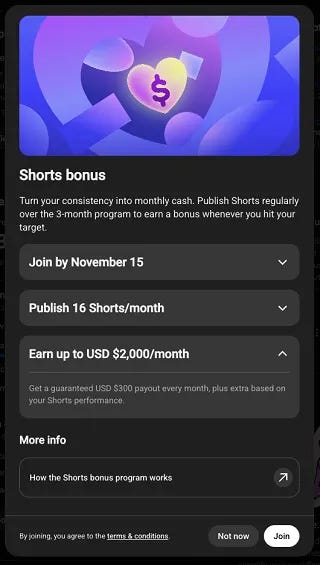
YouTube has launched an invite-only Shorts bonus programme across the US, UK, Germany, Brazil, Japan and South Korea. Selected creators in the YouTube Partner Programme receive a guaranteed monthly baseline payment for hitting a minimum number of Shorts, plus a separate performance bonus based on organic engaged views.
Alongside the bonus, YouTube is testing exclusive shopping affiliate incentive campaigns — where creators earn extra commissions for tagging specific products — and rolling out a revamped Shopping analytics display covering sales, product clicks and seller breakdowns.
The baseline bonus is designed to reward consistency rather than just virality, giving smaller YPP creators an additional income floor alongside ad revenue sharing.
PR

6. Woolmark installs a see-through billboard on a working sheep farm
Woolmark has installed a transparent billboard in an Australian sheep paddock as part of their ‘Return to Real’ platform. The headline reads: “The creators of the world’s smartest fibre aren’t scientists. But they do wear white coats.”
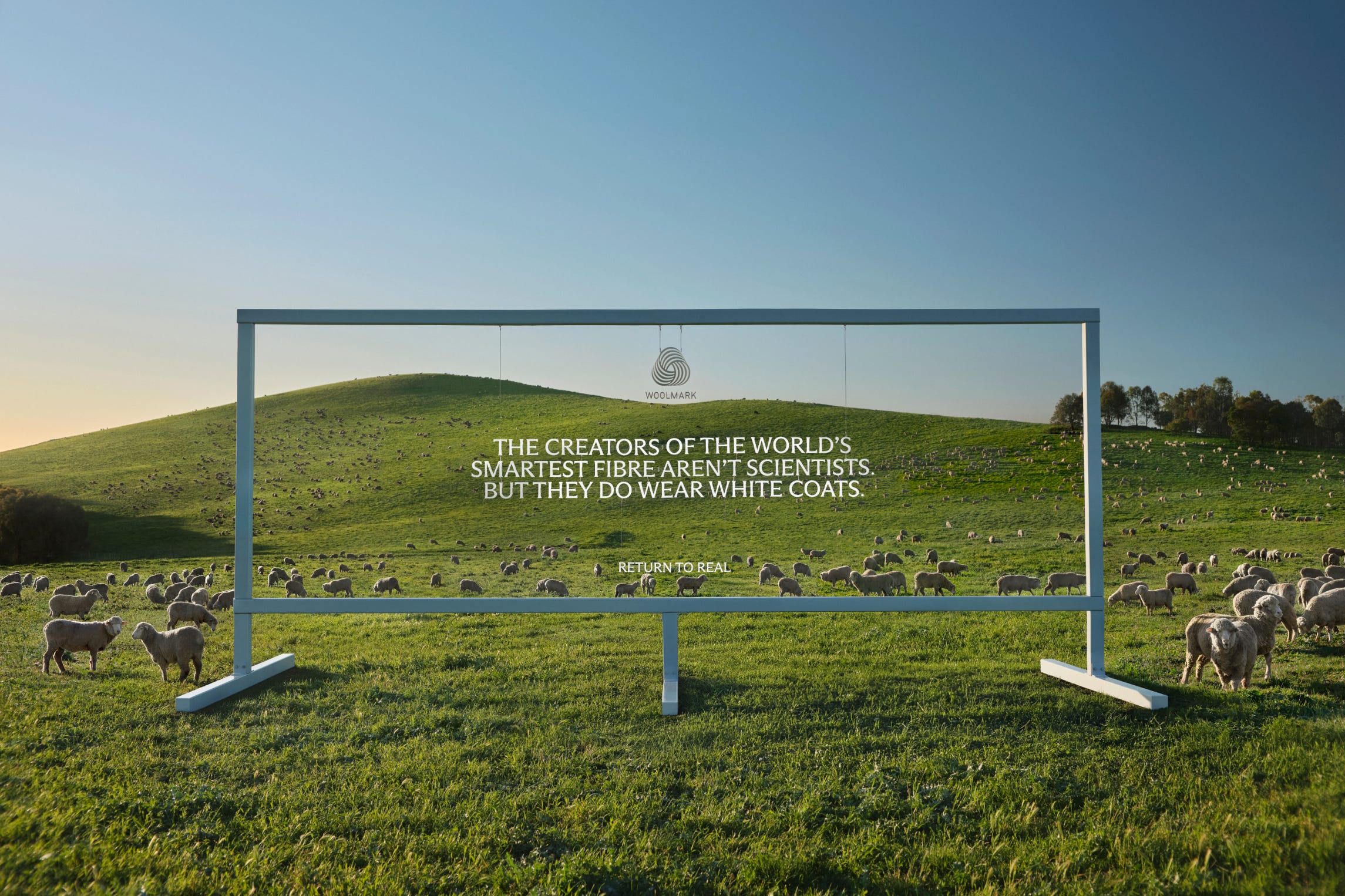
The campaign positions wool as the original performance material in a world preoccupied with engineered and AI-generated alternatives, backed by a four-year research collaboration with North Carolina State University.
The transparent billboard is the right format for it: the medium and the message are the same thing, and the sheep do the work that copy alone couldn’t.
7. Lime clarifies that its bikes are not for jousting
When artist Jack Carden and collaborator Cam Tholomew turned up to London Fields in Hackney in full suits of armour and attempted to joust each other on Lime e-bikes, hundreds of spectators turned out to watch. The video racked up over four million views on Instagram.
Lime’s response was swift and deadpan: “While we appreciate the medieval spirit, safety must always come first. Lime bikes are designed for getting around the city, not for jousting.”
The statement took the thing they legally had to say, found the most absurd and specific version of it, and committed entirely, generating its own second wave of coverage off the back of a single sentence.
AI

8. Anthropic launches Claude Duet for professionals and small businesses
Anthropic has joined the AI agent race with Claude Duet. Unlike consumer agents, Duet is built for work tasks: it generates daily briefings, builds dashboards and proactively surfaces recommendations as it monitors ongoing projects, running in the background on its own virtual machine and returning for approval before acting.
It connects to more than 6,000 Marketplace integrations, can make purchases via Stripe Link or Shopify Pay with user approval, and declines requests involving credit card numbers or government IDs by default.
Duet won’t book restaurants or trade securities; it’s positioned squarely at the professional workflow gap between Claude’s chat interface and full enterprise deployment.
9. Muse hits 10 million users in first 40 days
Speaking on Meta’s Q3 earnings call, Mark Zuckerberg confirmed that Muse has passed 10 million users in its first 40 days, with 25% of those who complete setup using the app daily.
More than a quarter of engaged shoppers on Muse had an average purchase size above $200, a figure Zuckerberg described as surprising even to Plaid, whose payment connector powers Muse’s shopping capability. Meta expects to monetise Muse by taking a percentage of commerce, with power users paying for advanced model access.
Zuckerberg also teased a “Muse network” vision where users’ agents interact with each other and with business agents directly, a model that would reshape how AI-mediated commerce and communication work at scale.
10. Amazon launches new Bee devices that listen to your conversations
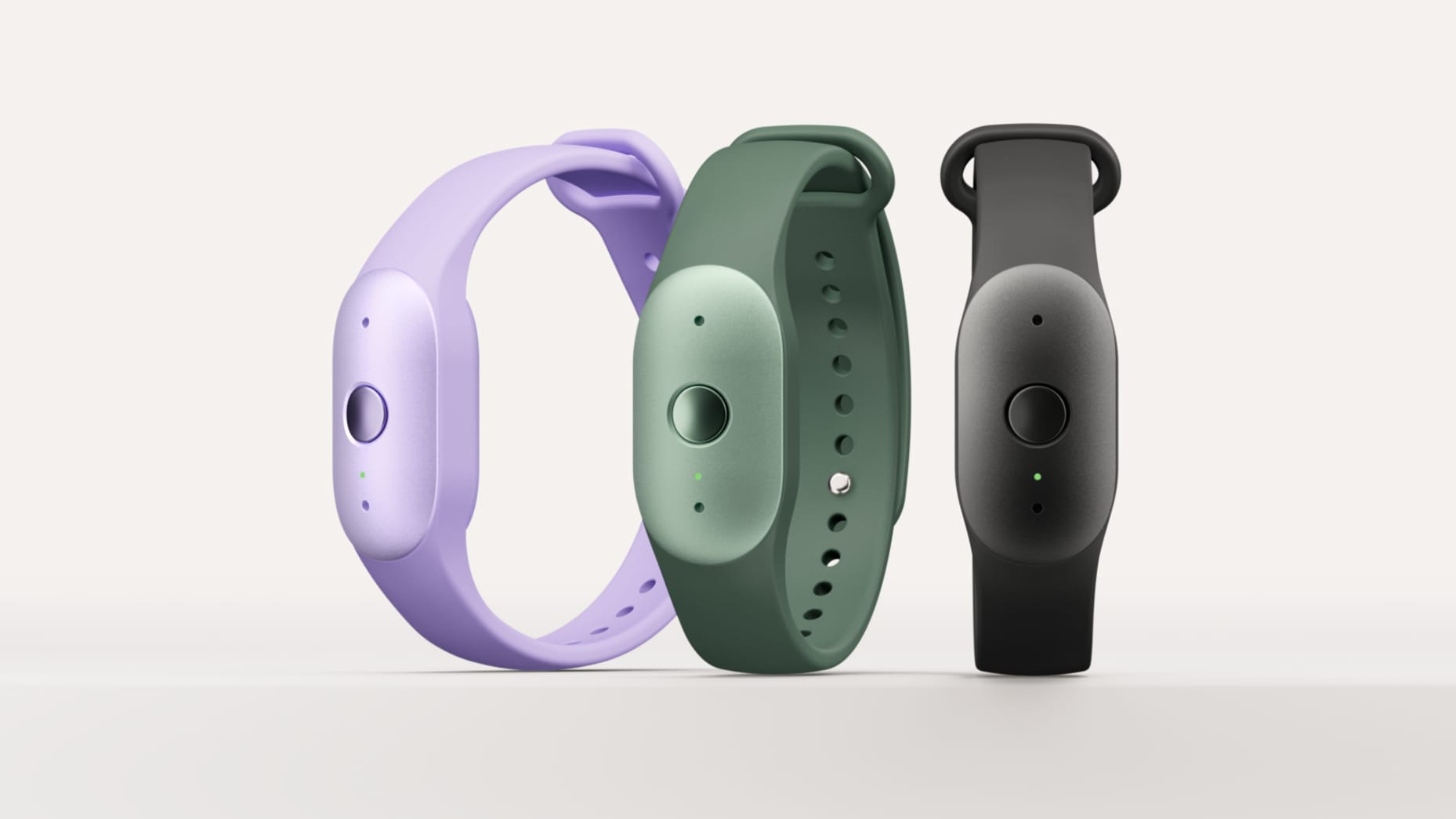
Amazon has refreshed its Bee lineup with the Bee Frontier, a wearable wristband or clothing clip, and the Bee Eclipse, a credit card-sized device that magnetically attaches to the back of a phone.
Both listen continuously, transcribing and summarising conversations and generating suggested to-dos. An LED light signals when recording is active. A $12-per-month Bee Pro subscription unlocks unlimited summaries, daily memories and integrations with Alexa+, Gmail, Google Calendar and Amazon.com.