

Search

1. Google's AI Overviews can now generate interactive tools on the fly
Google’s generative UI feature, which builds custom visual layouts and interactive tools in response to queries, is now rolling out inside AI Overviews. A search for “pH scale” can now return a clickable interactive visual, and a follow-up question can refine it further, for example plotting citrus fruits on that same scale.
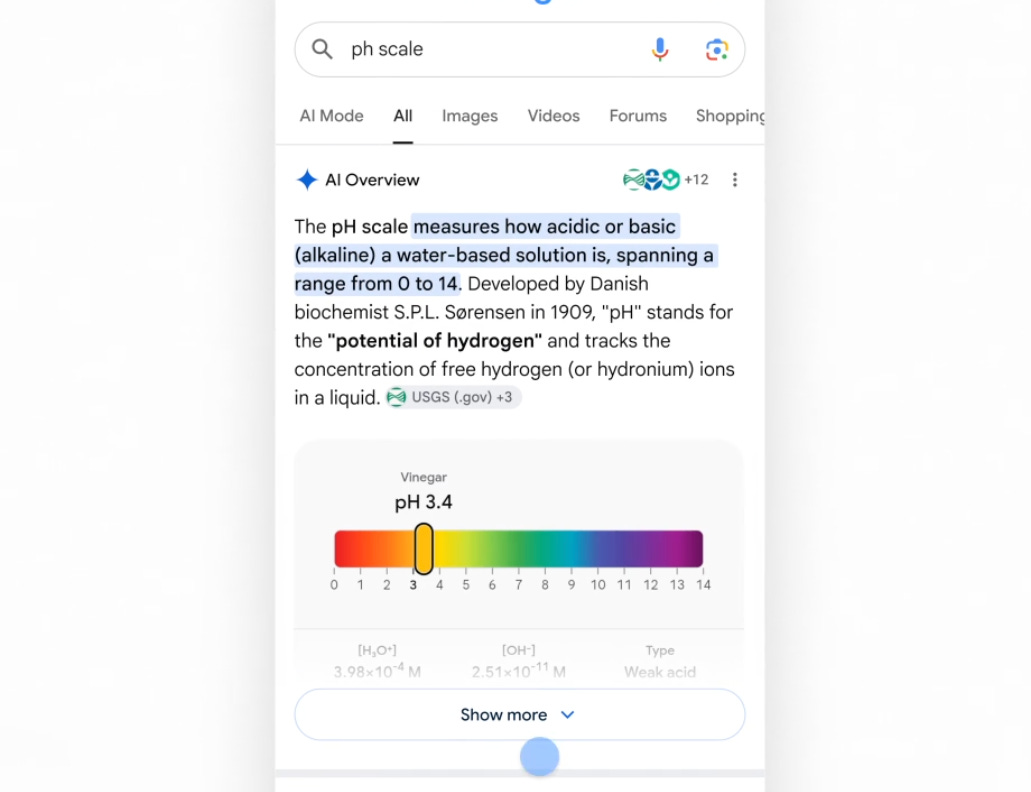
The feature is already live globally in English in AI Mode and is now beginning its AI Overviews rollout, with full availability expected within weeks.
Websites built around calculators, converters or comparison tools are most at risk of losing traffic as a result of this new update. If Google can generate the tool rather than link to it, it raises the question of why someone would click through.
2. Google gives publishers an embeddable "Preferred Source" button
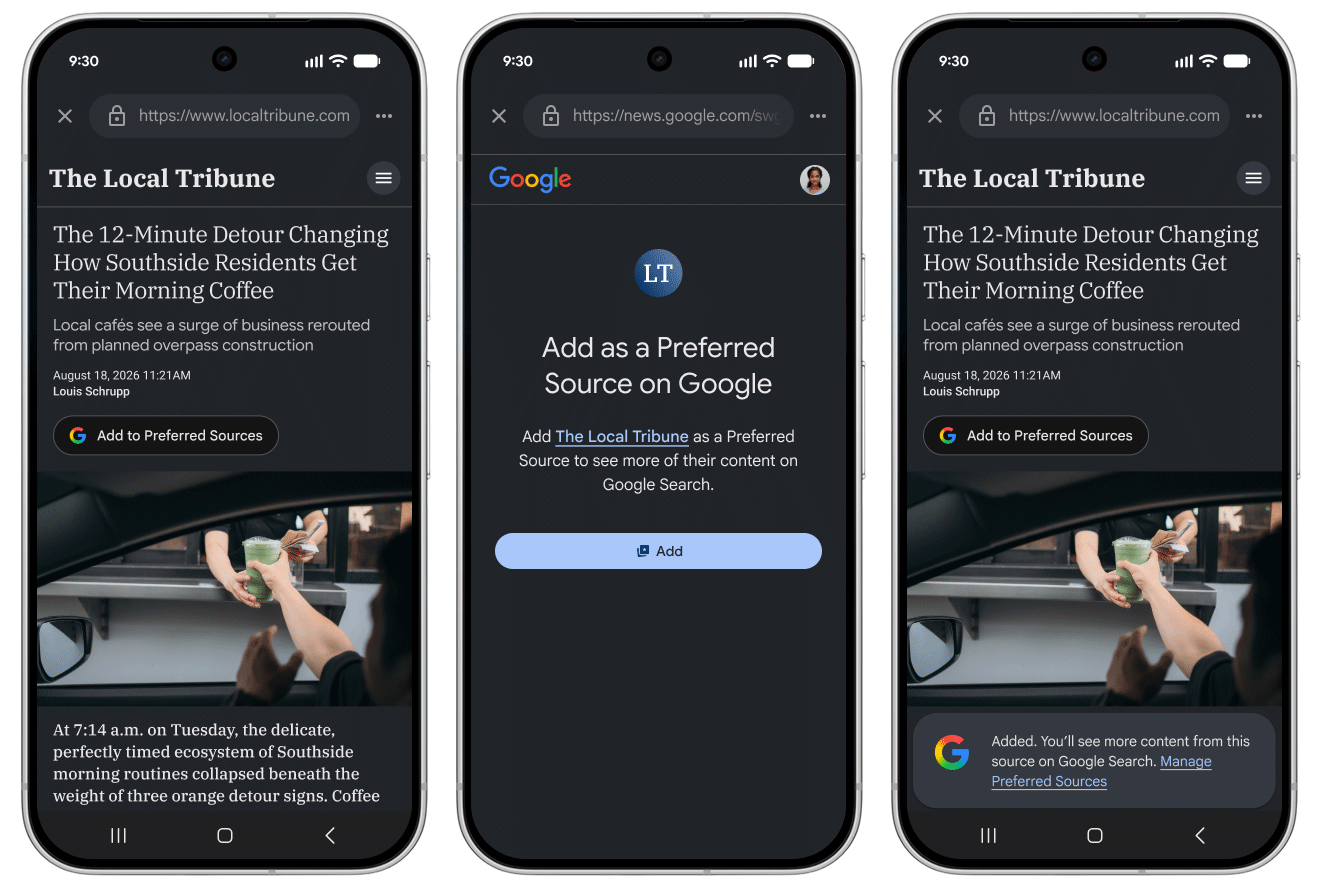
Publishers can now embed a button directly on their websites letting readers designate them as a preferred source across Google Search, Discover and Google News.
The move follows Google’s rollout of Preferred Sources in AI Mode and AI Overviews back in May. Google’s own research found that users are twice as likely to click through to a preferred source when one is available.
It’s a modest but practical tool for publishers navigating AI-driven traffic decline. Getting readers to opt in during the visit, rather than hoping Google’s algorithm surfaces you, shifts some control back to publishers. The click-through uplift could be meaningful if the adoption rate is decent.
3. ChatGPT is quietly dropping Reddit as a reference
New data shows Reddit’s citation rate in ChatGPT responses collapsed from around 4.5% of all outputs to just 0.5% in early August, after OpenAI switched to using a site-operator approach in its web searches, routing queries to specific domains rather than the open web.
The timing is notable. Reddit’s citation rate has fallen just as the platform experiments with AI-generated audio and video versions of its posts.
A spokesperson for Reddit noted that the platform doesn’t depend on LLM traffic and receives the bulk of its visits through direct and traditional search.
Reddit is reshaping the path to purchase. Here’s the data.
Want to understand Reddit's growing role in search, AI visibility and purchase decisions? Our Reddit Statistics 2026 guide breaks down the numbers brands need to know.
Social

4. TikTok Live now generates AI intros for creators
TikTok has quietly launched an AI-generated intro tool within its Live composer, letting creators tap a button to produce a short audience-facing summary of themselves and their broadcast topic before going live.
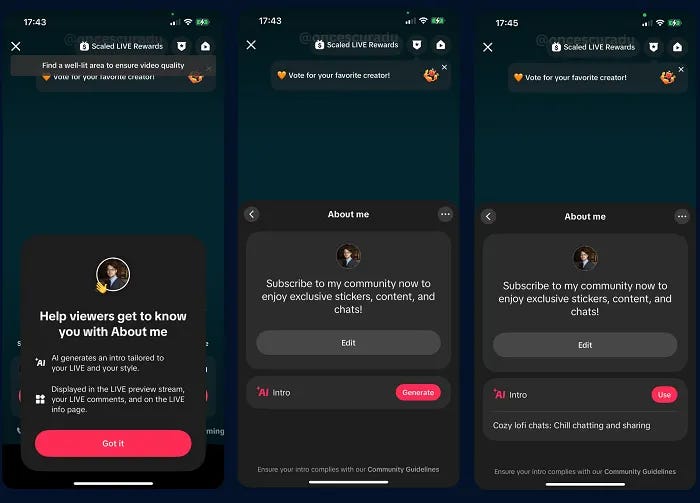
It’s a minor feature that will matter to very few creators. It does, however, sit within a broader pattern of platforms gradually inserting AI into the smallest creative moments, raising the question of where the line is between useful assistance and automating the parts of content creation that people usually enjoy.
5. Over one million people have reported AI slop on LinkedIn
LinkedIn CPO Hari Srinivasan confirmed that over a million users hit the platform’s “Seems like AI slop” button in its first two weeks of existence. Posts flagged through the system are getting around 40% fewer views compared to the period before the tool launched.
LinkedIn is also telling individual users when their posts are being perceived as AI-generated. It’s an unusual move for a platform to give that kind of feedback, and it suggests the AI content problem on LinkedIn has become serious enough that the brand value of the platform itself is at stake.
6. YouTube is offering creators millions to stay off Netflix
YouTube is apparently in talks to offer multimillion-dollar exclusivity deals to some of its biggest creators, in direct response to Netflix’s growing push to sign YouTube-native talent. Payments would take the form of direct programme funding and a share of revenue from major brand partnerships.
Creators who sign deals with Netflix risk losing YouTube marketing support, event access, and a cut of certain brand deals.
The move signals that simultaneous publishing has become a competitive threat for YouTube, and that the streaming-versus-creator economy wars are now directly about who controls audience loyalty.
7. Instagram publishes a practical guide to captions
Instagram shared six tips on writing captions that drive reach and engagement: lead with a compelling first line, tell a story, include an explicit CTA, use descriptive keywords, add per-image captions to carousels, and break text into short readable chunks.
Instagram noted captions function as data for its search and discovery systems, not just context for human viewers.
Caption strategy can often be treated as an afterthought during content creation, so it’s worth bookmarking for anyone briefing social content teams.
PR

8. Pokémon and Polaroid team up for the franchise's 30th anniversary
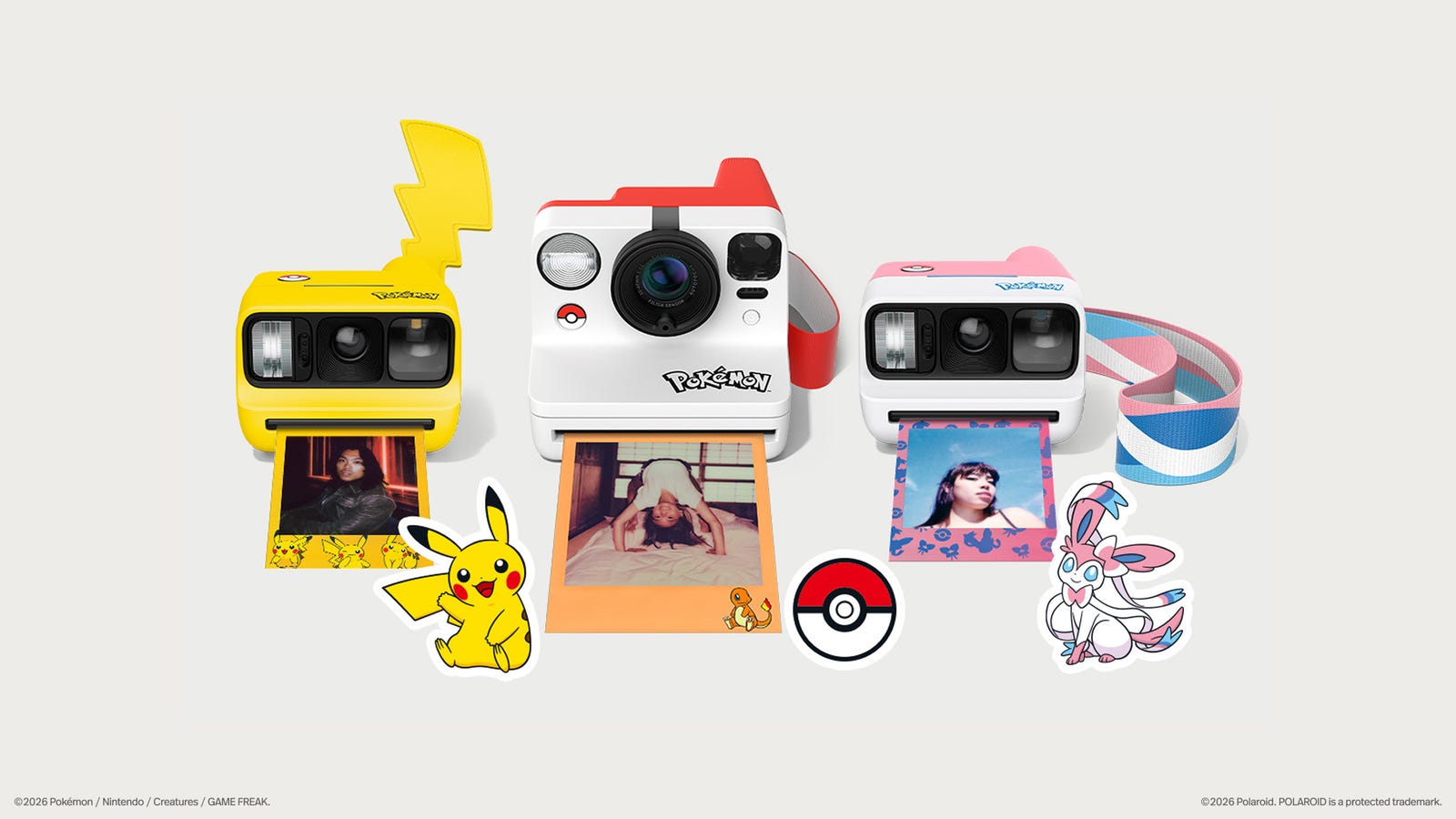
To mark Pokémon’s 30th anniversary, Polaroid has unveiled a nine-piece limited edition collection including three instant cameras plus matching film and accessories. Pre-orders opened on 25th August, with global launch on 5th October. Polaroid has described it as its biggest collaboration to date.
The pairing works well because both brands traffic in physical nostalgia. Polaroid’s analog revival and Pokémon’s multi-generational fanbase share an audience that really values tangible objects. Making memories with an instant camera fits the Pokémon Snap fantasy considerably better than most IP licensing tie-ins manage.
AI

9. ChatGPT for Mac can now read and send your iMessages
OpenAI has launched an Apple Messages plugin for the ChatGPT Mac app, letting it read and search iMessage, SMS, and RCS conversations, and send messages on the user’s behalf (with confirmation required as default before anything is dispatched).
The plugin runs locally using macOS technologies, and OpenAI stresses it only accesses data when directly instructed and with permission. It currently works on Apple Silicon Macs only.
Practically, this means asking ChatGPT to draft and send a message without switching apps is now possible. The confirmation step is a sensible guardrail, though the permission around “persistent approval” — which disables individual send confirmations — is one to read carefully before enabling.
10. OpenAI launches ChatGPT for Teens
In more OpenAI news, the AI giant has released a dedicated teen product with age-appropriate content restrictions, a Study Mode that guides teenagers through problems with prompts rather than answers, homework reminders and parental controls. Some are criticising the new product for arriving too late, years after ChatGPT reached hundreds of millions of users.
Enforceability also remains an open question. Teenagers are generally pretty good at working around parental controls, and Study Mode’s friction only works if the product is sticky enough that teens keep using it rather than switching to an unrestricted alternative. Actually useful study features will matter more than restrictions in determining whether it’s a hit.
11. Meta launches a Mac desktop app for Meta AI
Meta has officially released the Meta AI desktop app for macOS, adding two notable capabilities beyond its web equivalent: screen sharing, which lets users attach a specific window or screen as context for a prompt, and a system-wide voice dictation shortcut that summons a compact prompt bar from anywhere in macOS.
The desktop gap between Meta AI and competitors like Claude and ChatGPT remains significant, with agentic coding workflows, browser control, and computer use all absent from the consumer app. But launching a native Mac presence is a necessary step before closing those gaps, and the screen-sharing feature is useful from day one.
That’s all for this week! See you next Wednesday for another round-up of the best and biggest stories from across the Search-Verse™.