

Search

1. Google's September spam update is rolling out
Google’s fourth spam update of 2026 began rolling out on 24th September, applying globally across all languages with a completion window of up to two weeks. That’s notably longer than the previous three spam updates this year, each of which took fewer than three days. Google hasn’t disclosed what the update targets.
If rankings or traffic shifted around the 24th, check Search Console dates before drawing any conclusions, as the full effect may take several more days to settle.
2. Google rolls out AI Mode monitoring to everyone
Google has expanded its monitoring capability in AI Mode globally to all users, having previously limited it to Ultra and Pro subscribers. Users can now ask AI Mode to track anything, from restaurant openings to product restocks, and receive alerts through the Google app when something relevant changes across websites, forums, social posts, and Google’s Shopping Graph of 60 billion products.

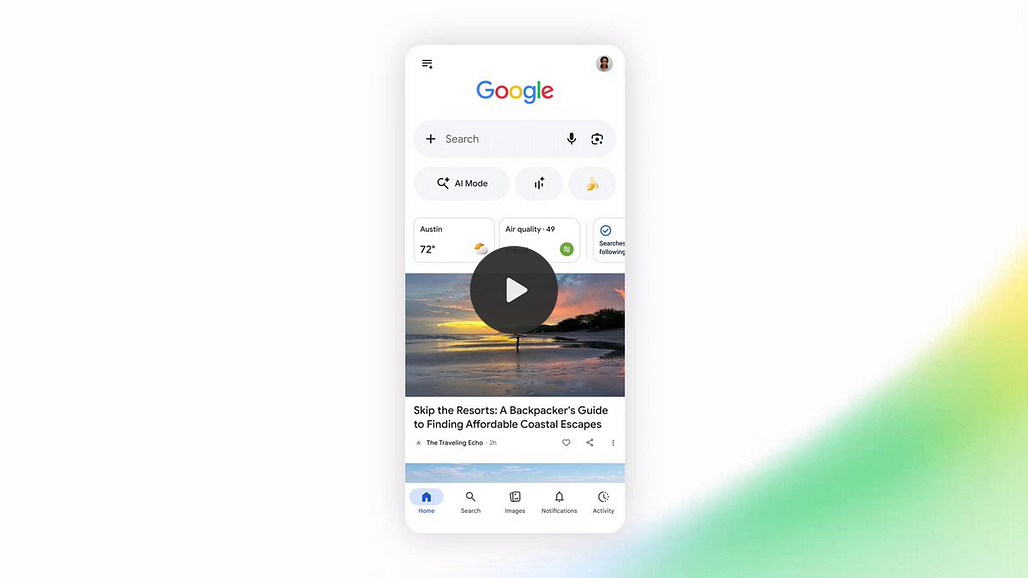
For brands in retail, hospitality and local services, it’s worth paying attention. Your product availability, pricing and events could now be feeding directly into personalised alerts for consumers who’ve asked Google to watch for them.
3. Search Console gets a filter for image-based searches
Google has rolled out a multimodal filter in Search Console’s Performance report, letting site owners see how their pages perform when someone searches using an image via Google Lens, Circle to Search, uploaded images, or Chrome’s right-click image search. The filter is available under the Web search type and provides page-level data, though query data isn’t available since these searches rarely involve text.
For product-heavy sites, this opens up a cleaner view of which pages people are landing on through visual search. The same data is also rolling out to the generative AI performance report.
Social

4. YouTube gives users control of their own algorithm
At Made on YouTube 2026, Google announced Custom Feeds: a feature that lets users build their own homepage tab using a plain-language prompt (like “witty podcasts for my morning commute” or “evening wind down with long documentaries”) with Gemini generating and automatically refreshing a personalised feed around it.
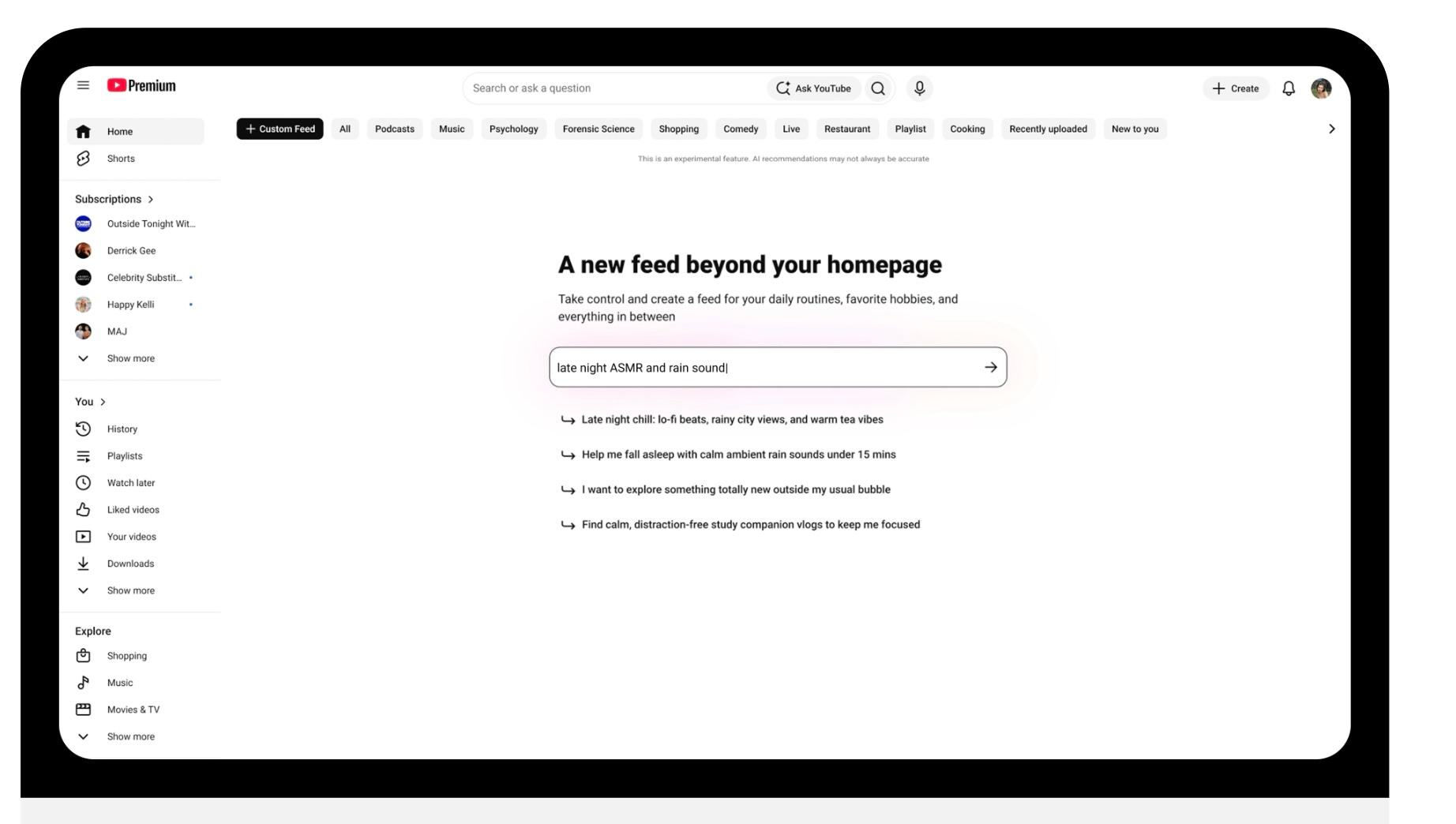
The same event introduced Shorts series for episodic content, AI-powered conversational editing tools, Ask Studio for drafting brand pitches, real-time livestream dubbing, and AI comment moderation.
The Custom Feeds launch has two implications for brands and creators: it gives highly engaged audiences a way to curate their experience around specific niches, and it puts AI at the centre of how YouTube’s homepage is populated for those users.
5. Instagram publishes a Reels guide
Instagram released an updated practical guide to Reels creation, covering length, text overlays, captions, editing controls and distribution. The timing is notable, as Reels now accounts for more than 50% of all time spent on Instagram.
The guide is aimed at a general audience rather than experienced creators, but the platform’s reminder that captions serve as data for Instagram’s search and discovery systems, as well as human context, is worth flagging.
The sweet spot for most formats is 15 to 60 seconds, but for longer storytelling and how-tos, anywhere between 60 seconds and 3 minutes is golden.
PR

6. Wendy's made a proper emo album, and it's on Spotify
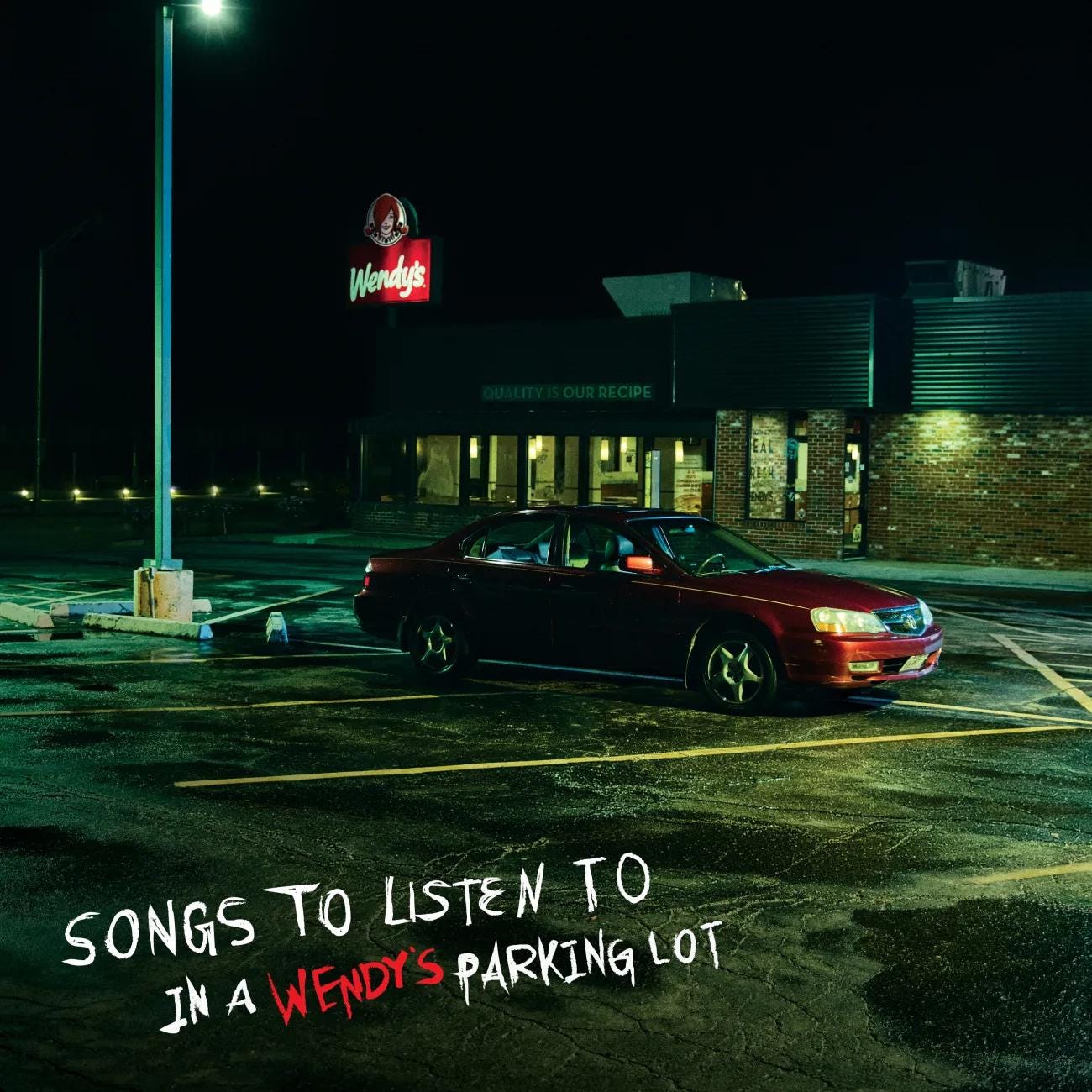
Wendy’s has released “Songs to Listen to in a Wendy’s Parking Lot”, a six-track emo EP produced by multi-platinum producer Matt Squire and featuring vocalists from Silverstein, Memphis May Fire and Blessthefall. Track highlights include “She Said She Didn’t Want Fries, She Lied” and “Frosty Cup Is Empty, I’m Barely Hanging On.” The album is available on all major streaming platforms.
In a time of AI-generated playlists, releasing a real emo EP with proper genre musicians is a smart move. The absurdity is the point, and it’s got people talking about Wendy’s in a way a TV spot never would.
AI

7. Meta debuts the Muse Charm, a palm-sized AI gadget

Unveiled by Mark Zuckerberg at Meta Connect 2026, the Muse Charm is a pocket-sized holdable device built entirely around the Muse AI agent. It features a 2-inch OLED touchscreen, 5G connectivity, front and rear cameras, and a custom operating system with a personalised Muse character at its centre.
The device lets users delegate tasks, send messages and control connected services without reaching for their phone. Do people actually want a second AI device alongside their phone? It’s an open question. But this is a good signal of how seriously Meta is treating Muse as a platform.
8. Anthropic launches Claude Sonnet 5.5
Claude Sonnet 5.5 is the second model in Anthropic’s 5.5 family and a dramatic step up from Sonnet 5, particularly in coding: it scores 70.6% on Terminal-Bench 4.0 compared to Sonnet 5’s 10.3%, and sits within two points of Opus 5.5 on knowledge work benchmarks.
It runs more than 30% faster than its predecessor, costs up to 30% less per task despite identical per-token pricing, and is the first Sonnet model to carry cybersecurity safeguards comparable to those on Opus 5.5.
Early tester highlights include completing Pokémon Red from screenshots alone, and producing earnings presentations described as ready to send without editing.
9. OpenAI launches GPT-6 Sol and Luna at 50% off
OpenAI has extended the GPT-6 family with Sol and Luna, trained using similar methods to GPT-6 Astra but optimised for cost efficiency and everyday scale. Both models are priced at 50% below their GPT-5.6 equivalents: Sol at $2 per million input tokens and $10 output, Luna at $0.10 input and $0.50 output.
Both are available in ChatGPT Work and Codex.
10. Google launches Gemini 3.8 text-to-speech
Google has released Gemini 3.8 Flash TTS and 3.8 Flash-Lite TTS, its most expressive audio generation models yet.
The Flash TTS model supports generative voice design from natural language prompts, a library of over 2,000 production voices, voice replication from a 30-second audio sample, line-by-line performance direction, and native two-speaker scene staging. Flash-Lite TTS is built for high-volume, cost-efficient dubbing and voice agent work.
Both models are available now via the Gemini API and Google AI Studio, and top Hume AI’s Voice Design Benchmark.
That’s a wrap for this week! See you next Wednesday for another round-up of the best and biggest stories from across the Search-Verse™.