

Search

1. There's no position data for your links inside AI Overviews
Google’s John Mueller confirmed in a Reddit thread that Search Console cannot tell you where your link sits within an AI Overview. Every source inherits the Overview’s overall block position, regardless of whether it appears near the top or buried deeper in the answer. An impression is also not a guarantee that anyone saw your citation, since some links require expanding a section before they’re visible.
The current AI performance report shows impressions but no clicks, no position granularity, and no conversion data. Mueller said the problem is hard to solve in a useful way and invited suggestions, but offered no timeline.
2. Google is quietly testing direct payments to publishers for AI content
Google is piloting a programme that pays publishers when their content shapes an answer in Gemini, AI Overviews, or AI Mode (not when it’s merely linked to afterward).
Publishers in the pilot see a monthly earnings figure inside Search Console and can opt out at any time. Early participants describe the amounts as thin compared to ad revenue, and the payout methodology isn’t disclosed. The programme extends beyond news publishers to any site whose content contributes to AI answer generation.
The catch, as one exec noted, is that accepting it could weaken a publisher’s negotiating hand for anything better down the line.
3. OpenAI is testing a "click to chat" ad format for ChatGPT
OpenAI has introduced a new ad unit to select advertisers that routes a click not to a brand’s website but into a branded AI chat within ChatGPT itself.
The format attaches a business agent to an ad, so when a user taps “Chat with us,” they enter a conversation with the brand’s AI rather than a product page. OpenAI’s CFO described existing ChatGPT ads as a “basic starting point” and framed this as what a truly AI-native format could look like.
Whether keeping shoppers inside ChatGPT rather than a brand’s own site serves advertisers’ interests is the open question, particularly for retailers who want first-party data from their own properties.
Social

4. Instagram now lets you pin tagged posts to your grid
Instagram now lets users add posts they’ve been tagged in directly to their main profile grid, with a tag icon appearing on the thumbnail to indicate it originated elsewhere. The option appears in-stream when viewing any tagged post.
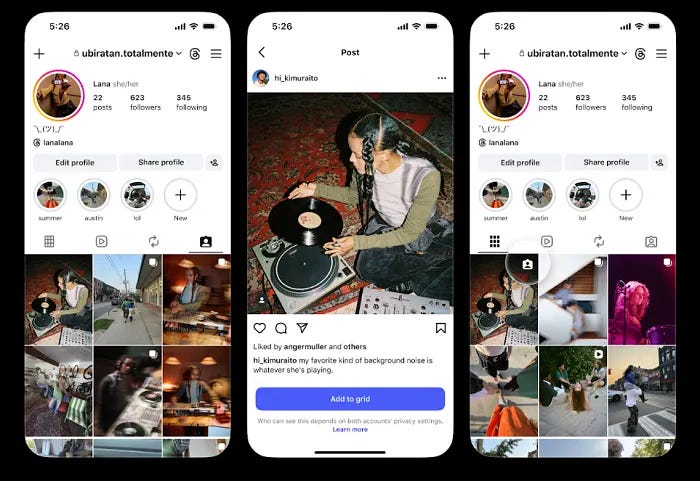
For influencer partnerships, this is a small but useful change, as creators can now surface brand collabs on their grids without owning the original post. It also gives brands posting collaboration content a way to get that content onto a creator’s profile page, where it reaches their followers organically.
5. Amazon Prime Video enters the short-form news race
Amazon is adding on-demand short-form news clips to Prime Video across TV and living room devices, with mobile support to follow. Clips will appear in a dedicated News destination alongside existing local, national, and world news coverage available to all US users regardless of Prime membership.
Amazon joins Peacock, HBO Max, Netflix, and Disney+ in adding short-form content to their platforms this year.
The framing as a TikTok rival is partly aspirational, as Gen Z goes to social apps for news because of tone and presentation, not just clip length. But for brands placing pre-roll or mid-roll ads against news content, a growing short-form news inventory across streaming is a meaningful new consideration.
PR

6. Ikea made a Skyrim mod featuring Matt Berry as a sentient storage unit
Ikea are back at it again. This time, they released Kallax Storageborn: a free, fully playable Skyrim mod available through Bethesda’s in-game Creations menu.
The mod triggers when the player becomes encumbered, sending them on a quest to build a Kallax shelving unit companion voiced by Matt Berry, with its own dialogue, a full questline, Ikea-themed dungeons, and loot including the Meatball Helmet and the Allenblade.
Skyrim encumbrance is one of the game’s most enduring in-jokes after fifteen years, and Ikea’s answer is functionally a storage product with a personality. It’s really kind of genius.
AI

7. iOS 27 is here, and Siri AI is finally live (sort of)
Apple shipped iOS 27 on 14th September, bringing with it a ground-up rebuilt Siri that runs as a dedicated app, can access personal context across emails, photos and messages, and responds in a more conversational way.
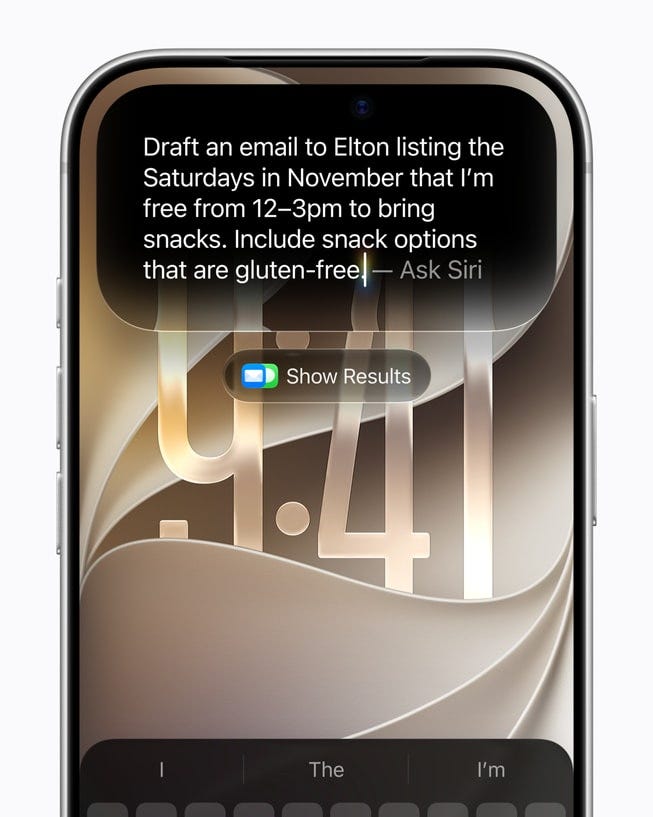
There are a few catches, however. It currently launches in beta, requires users to opt in via Settings, carries daily usage limits on server-side features, and is currently English-only.
Incoming CEO John Ternus introduced it as “personal intelligence that’s actually personal.” The delayed, limited rollout is a reminder that Apple is still catching up, but 2.5 billion active devices means that even a cautious launch will represent the largest real-world test of any AI assistant in history.
8. Meta is building a Shared Agents marketplace for Muse
TestingCatalog found a hidden Shared Agents section within the Muse app, featuring a working creation flow that lets users configure and deploy sub-agents with custom names, appearances, prompts, skills, and external service connections. These agents appear as separate conversations inside Muse and can theoretically be shared with others.
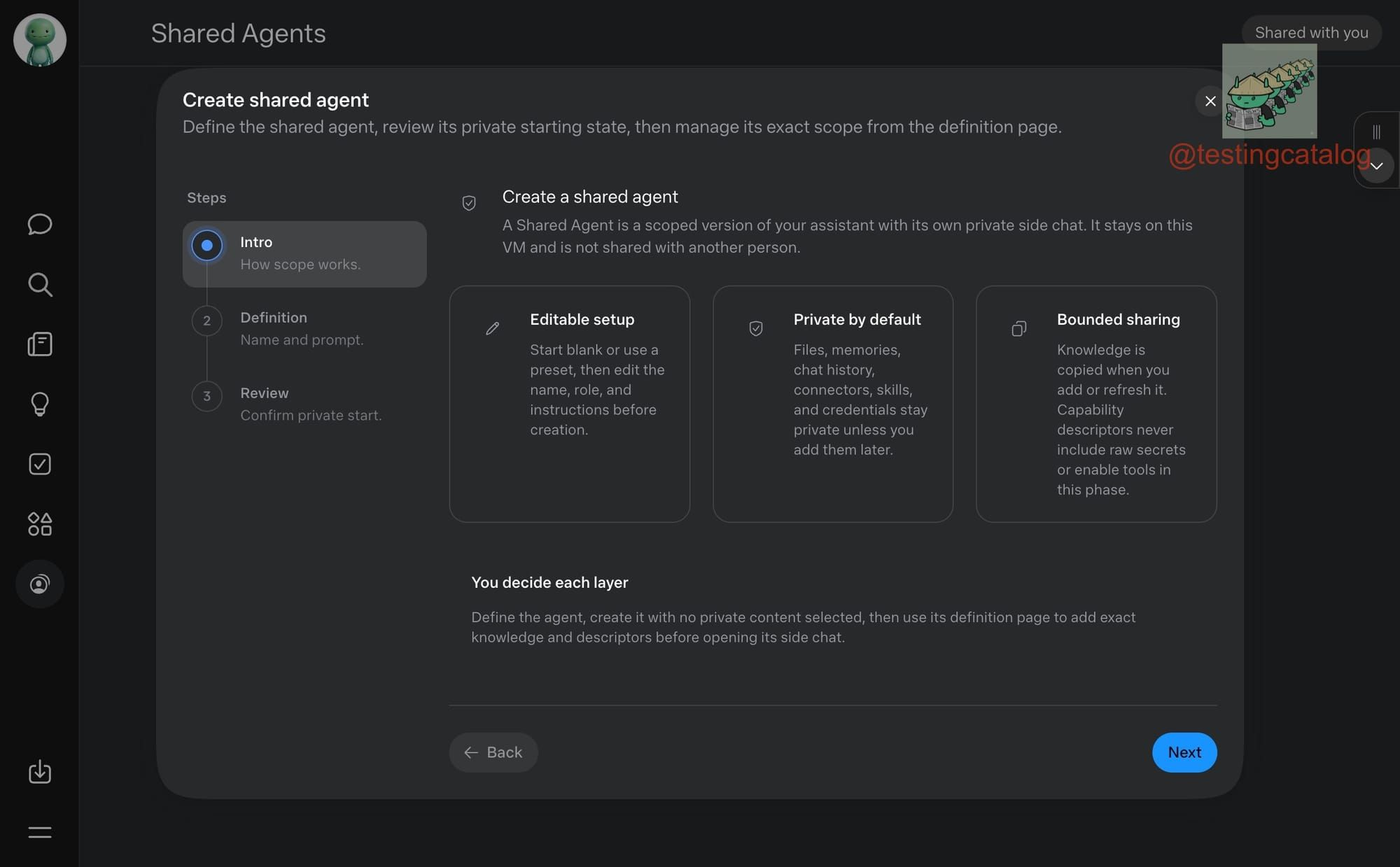
The system resembles Grokbot’s agent builder, but Meta’s advantage is the existing footprint across Instagram, WhatsApp, Facebook and Messenger. A public announcement is expected at Meta Connect next week, which is already listed as covering agentic development workflows.
For brands and agencies already active across Meta’s platforms, a shareable agent ecosystem could represent a meaningful new channel for customer support, sales, and creator workflows — if the sharing permissions are broad enough to be useful.
That’s a wrap for this week! See you next Wednesday for another round-up of the best and biggest stories from across the Search-Verse™.